


How Much Does a Kitchen Remodel Cost in 2026? Expert Guide
Kitchen remodeling remains one of the most valuable home improvement projects in 2026, but costs vary more than many homeowners expect. According to recent remodeling industry estimates, a kitchen renovation can range from around $15,000 for basic updates to well over $150,000 for a high-end custom project. Your final budget depends on factors such as kitchen size, material quality, labor rates, and whether you’re changing the layout. While remodeling costs have stabilized compared to previous years, premium materials, skilled labor shortages, and customization continue to influence pricing across the United States.
Average Kitchen Remodel Cost
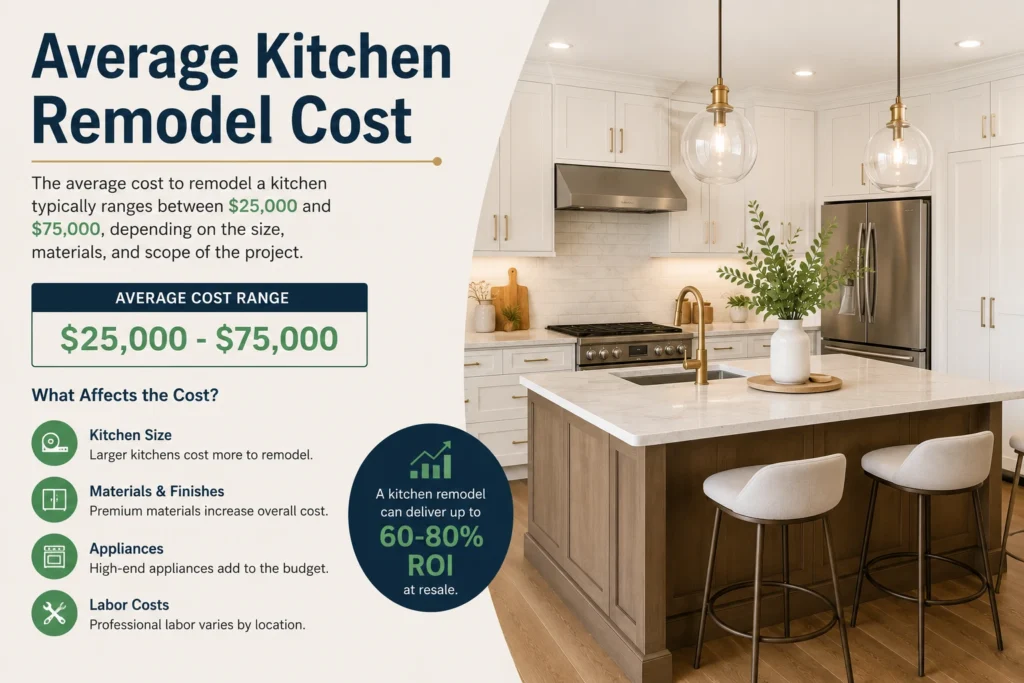
The average kitchen remodel cost in the United States falls between $25,000 and $50,000, although many projects end up above or below that range depending on their scope. A cosmetic refresh may cost less than $20,000, while a complete renovation involving custom cabinets, structural changes, and premium appliances can easily exceed six figures. Industry experts often recommend allocating an additional 10% to 20% of your planned budget for unexpected expenses. This financial cushion can help pay for unforeseen problems discovered during demolition or renovation.
Cost by Kitchen Size
The size of your kitchen has a direct impact on remodeling costs because larger spaces require more materials, labor, and installation time. However, square footage alone doesn’t determine your budget. Design complexity, appliance selection, cabinetry style, and structural modifications often influence costs just as much as size. A small kitchen with luxury finishes may cost more than a larger kitchen with standard materials. Understanding how remodeling costs typically vary by kitchen size can help you set realistic expectations before planning your renovation project.
Small Kitchen Remodel
Small kitchens, typically measuring less than 100 square feet, generally cost between $10,000 and $30,000 to remodel. Homeowners often focus on maximizing storage, improving functionality, and updating finishes without making major structural changes. Because smaller kitchens require fewer materials, many people choose higher-quality countertops, fixtures, and appliances while still maintaining a manageable overall budget.
Medium Kitchen Remodel
Medium-sized kitchens, usually between 100 and 200 square feet, often cost between $30,000 and $60,000, depending on the renovation scope. These projects commonly include replacing cabinets, countertops, flooring, lighting, and appliances while preserving the existing layout. Many homeowners consider this price range the best balance between affordability, functionality, and long-term home value improvement.
Large Kitchen Remodel
Large kitchens measuring more than 200 square feet typically require budgets starting around $60,000, with luxury projects often exceeding $150,000. These renovations frequently involve oversized islands, custom cabinetry, premium appliances, designer lighting, and sometimes structural changes. Because labor and material requirements increase significantly, larger kitchens generally experience the greatest variation in overall remodeling costs.
Cost by Remodel Type
Not all kitchen renovations involve the same level of work. Some homeowners simply update finishes, while others completely redesign their space from the ground up. Remodeling professionals generally categorize kitchen projects into three types: minor, mid-range, and luxury remodels. Understanding these categories can help you estimate costs more accurately and determine which level of renovation aligns with your goals, budget, and long-term plans. The scope of work often influences pricing more than the kitchen’s physical size itself.
Minor Remodel
A minor kitchen remodel generally costs between $10,000 and $30,000 and focuses on cosmetic improvements rather than structural changes. Typical upgrades include cabinet painting or refacing, countertop replacement, new fixtures, updated lighting, and fresh flooring. According to remodeling industry reports, minor kitchen renovations often deliver stronger resale value than more expensive luxury renovations.
Mid-Range Remodel
Mid-range kitchen remodels typically cost between $30,000 and $75,000 and represent the most common renovation category in the United States. These projects usually include new cabinets, countertops, appliances, flooring, and lighting while keeping the existing kitchen layout intact. Homeowners often choose this approach because it balances cost, functionality, appearance, and long-term value.
Luxury Remodel
Luxury kitchen remodels commonly start at $80,000 and can exceed $200,000 depending on customization and design preferences. These renovations often include custom cabinets, premium stone countertops, high-end appliances, smart technology features, and structural upgrades. Many luxury remodels prioritize personalization, premium craftsmanship, and long-term lifestyle benefits over immediate financial return.
Factors That Affect Kitchen Remodel Costs
Several factors determine the total cost of a kitchen remodel, and understanding them early can help prevent budget surprises. Cabinetry remains the largest expense category in most projects, often accounting for up to one-third of total costs. Labor expenses, appliance selection, countertop materials, plumbing changes, and electrical upgrades also play significant roles. In addition, regional labor rates and permit requirements can substantially affect pricing. The more customized and complex your renovation becomes, the greater the likelihood that your overall budget will increase.
Main Kitchen Remodel Costs
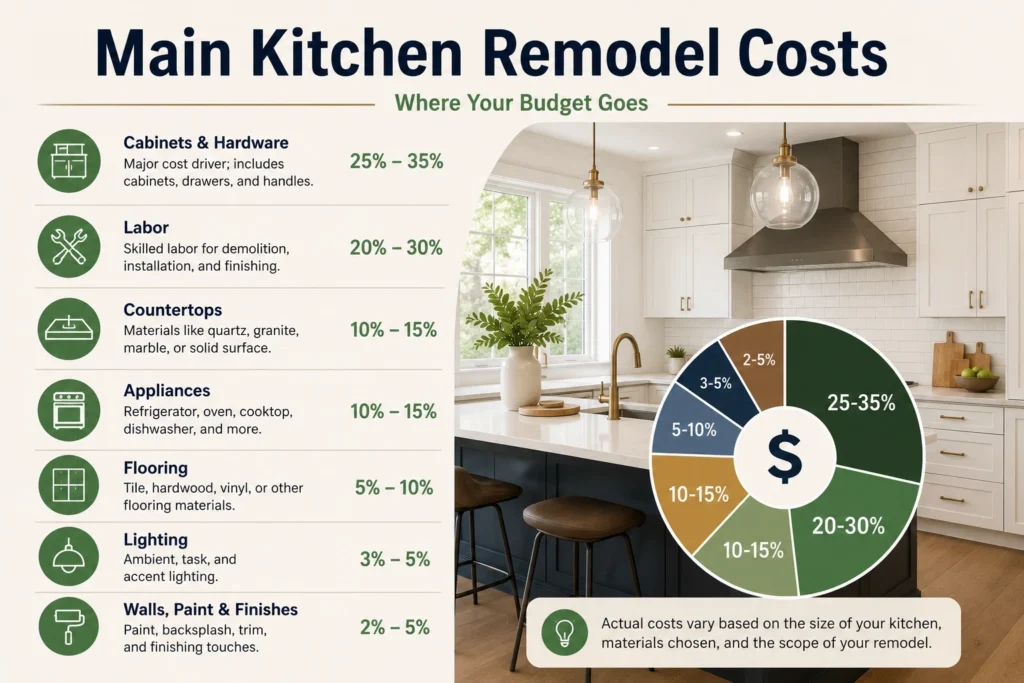
When planning a kitchen remodel, understanding where your money goes is just as important as knowing your total budget. In most projects, cabinetry remains the single largest expense, followed by countertops, labor, flooring, and appliances. Industry estimates suggest that cabinets alone can account for 25% to 35% of the total remodeling budget. Labor costs have also increased in recent years due to the continued demand for skilled contractors. Breaking down these major expenses before starting your project can help you prioritize upgrades and avoid spending too much in one area.
Cabinets
Cabinets are often the most expensive component of a kitchen remodel because they affect both functionality and appearance. Stock cabinets offer the most affordable option, while semi-custom and custom cabinetry can significantly increase costs. Many homeowners choose to invest more heavily in cabinets because they typically influence the overall look and long-term value of the kitchen.
Countertops
Countertop prices vary considerably depending on the material selected. Laminate remains one of the most budget-friendly options, while quartz, granite, and marble continue to dominate the premium market. Quartz countertops have become especially popular due to their durability, low maintenance requirements, and modern appearance, making them a common choice for mid-range and luxury remodels.
Appliances, Flooring, and Labor
Appliances, flooring, and labor costs together can represent a substantial portion of your remodeling budget. Premium appliances alone can cost several thousand dollars, while flooring expenses depend largely on material selection. Labor remains one of the most unpredictable costs because contractor rates vary significantly by region, project complexity, and local market demand.
Hidden Remodeling Costs
One of the biggest reasons kitchen remodels exceed their original budgets is the presence of hidden costs. Many homeowners carefully budget for cabinets and countertops but underestimate expenses such as permits, demolition, electrical upgrades, plumbing repairs, and structural modifications. Contractors often recommend reserving an additional 10% to 20% of your budget for unexpected expenses discovered during construction. Older homes, in particular, can reveal outdated wiring, water damage, or code compliance issues once demolition begins. Planning for these hidden expenses can prevent financial stress later in the project.
Kitchen Remodel Costs by Region
Kitchen remodeling costs can vary dramatically depending on where you live. Regional differences in labor rates, material availability, permit fees, and local housing markets all influence renovation pricing. Homeowners in major metropolitan areas and coastal regions generally pay considerably more than those living in smaller cities or rural communities. Understanding these regional variations can help you establish realistic expectations and create a budget that reflects local market conditions rather than relying solely on national averages.
Northeast
The Northeast remains one of the most expensive regions for kitchen remodeling due to higher labor costs, stricter building regulations, and elevated material prices. Homeowners in states such as New York, Massachusetts, and New Jersey often pay substantially more than the national average for both mid-range and luxury kitchen renovations.
Midwest
Kitchen remodeling costs in the Midwest are generally more affordable compared to coastal markets. Lower labor expenses and reduced permit costs often allow homeowners to complete larger renovation projects within moderate budgets. However, premium finishes and custom work can still increase overall expenses significantly.
South
The Southern United States typically offers competitive remodeling costs due to lower labor rates and relatively affordable construction markets. Many homeowners in this region can complete mid-range kitchen remodels at prices below the national average while still achieving high-quality results.
How to Save Money on a Kitchen Remodel
Reducing kitchen remodeling costs doesn’t necessarily mean sacrificing quality. In fact, many industry experts recommend focusing on strategic decisions rather than simply choosing the cheapest materials. One of the most effective ways to save money is by keeping the existing kitchen layout, since relocating plumbing, gas lines, and electrical systems can dramatically increase costs. Other cost-saving strategies include refinishing cabinets, purchasing appliances during seasonal sales, and completing selected cosmetic tasks yourself. Careful planning and disciplined budgeting remain the most effective ways to maximize value while controlling expenses.
Best Kitchen Upgrades for ROI
Not every kitchen upgrade delivers the same return on investment. If your goal is to increase your home’s resale value, experts generally recommend focusing on practical improvements rather than luxury features. According to the latest Cost vs. Value reports, smaller, functional kitchen upgrades often recover a higher percentage of their cost than major luxury renovations. Buyers tend to prioritize updated cabinets, modern countertops, energy-efficient appliances, and improved lighting over highly personalized features. Choosing upgrades with strong resale appeal can help you enjoy your renovated kitchen while also protecting your long-term investment.
| Kitchen Upgrade | Typical ROI Potential | Buyer Appeal |
| Cabinet Refacing or Painting | High | Excellent |
| Quartz Countertops | High | Excellent |
| Energy-Efficient Appliances | High | Very Good |
| New Lighting Fixtures | Moderate to High | Very Good |
| Updated Flooring | Moderate | Good |
| Smart Kitchen Features | Moderate | Good |
| Luxury Appliances | Low to Moderate | Niche |
| Custom Cabinetry | Low to Moderate | Limited |
| Structural Layout Changes | Low | Project-Specific |
Kitchen Remodel Budget Examples
One of the biggest challenges homeowners face is understanding what a realistic kitchen remodeling budget actually looks like. A $20,000 budget creates a very different kitchen than a $100,000 renovation. The key difference isn’t always the size of the kitchen but rather the scope of work, material quality, and level of customization. In many cases, homeowners can achieve impressive results by prioritizing functionality and avoiding unnecessary structural changes. Comparing different budget levels can help you determine which remodeling approach aligns best with your goals and financial situation.
| Budget | What You Can Typically Afford | Best For |
| $20,000 | Cabinet painting/refacing, new countertops, backsplash, lighting, and minor flooring updates | Budget-conscious remodels |
| $50,000 | New cabinets, quartz countertops, appliances, flooring, and lighting upgrades | Mid-range renovations |
| $100,000+ | Custom cabinets, luxury appliances, structural changes, premium finishes | High-end remodels |
Frequently Asked Questions
What is a realistic kitchen remodel budget?
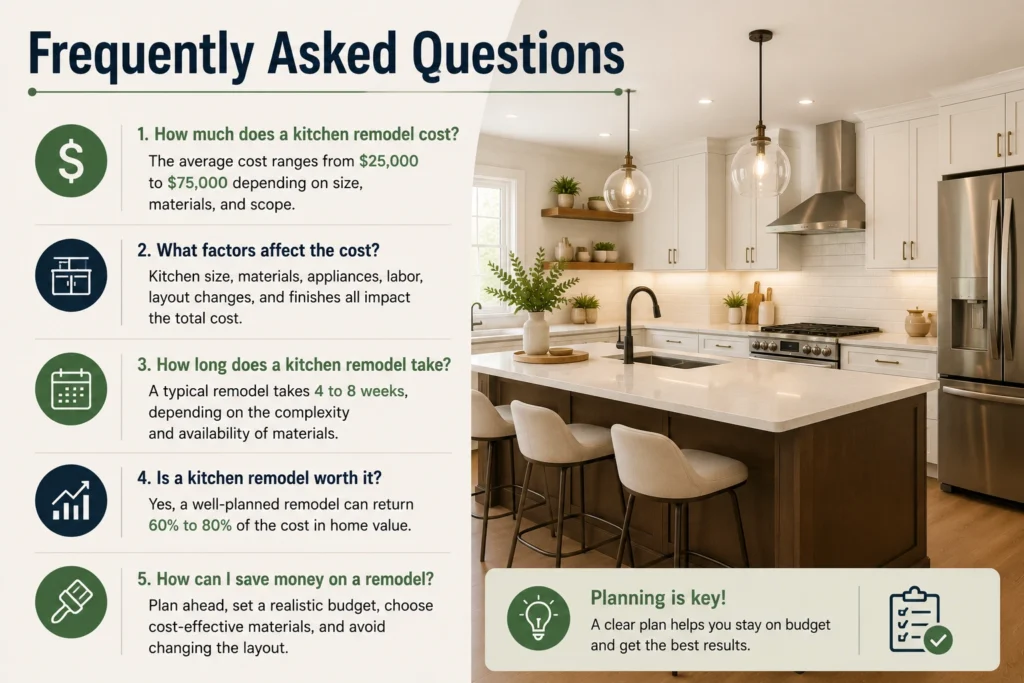
A realistic kitchen remodeling budget depends largely on your goals, location, and the condition of your existing kitchen. In 2026, many homeowners spend between $25,000 and $50,000 on a mid-range kitchen renovation. Projects involving custom cabinetry, luxury appliances, or structural changes often require substantially larger budgets. Setting aside an emergency reserve of 10% to 20% remains a widely recommended practice.
How much does a 10×10 kitchen remodel cost?
A standard 10×10 kitchen remodel typically costs between $20,000 and $60,000, depending on materials, labor rates, and the complexity of the renovation. A simple cosmetic update may remain near the lower end of this range, while projects involving custom cabinetry, premium countertops, and new appliances can increase costs considerably.
What costs the most in a kitchen remodel?
Cabinets are generally the most expensive component of a kitchen remodel and can account for approximately 25% to 35% of the total project budget. Custom cabinetry, in particular, can significantly increase overall costs. Labor, countertops, and appliances also represent major portions of most remodeling budgets.
Does a kitchen remodel add home value?
Yes, kitchen remodels continue to be one of the most valuable home improvement projects. Recent remodeling studies indicate that minor kitchen renovations often recover a significant percentage of their cost at resale, while also making homes more attractive to potential buyers. However, return on investment varies by market, project scope, and local buyer preferences.
How long does a kitchen remodel take?
Most kitchen remodels take between six and twelve weeks to complete once construction begins. Smaller cosmetic renovations may finish sooner, while larger projects involving permits, structural changes, or custom materials can take several months. Proper planning and contractor coordination are often the most important factors affecting project timelines.
Conclusion
The cost of a kitchen remodel in 2026 depends on several factors, including the size of your kitchen, the scope of the renovation, the materials you choose, and local labor rates. While some homeowners can complete a functional update for under $20,000, others may invest more than $100,000 in a custom renovation. The key to a successful kitchen remodel is setting a realistic budget, prioritizing upgrades that matter most, and planning for unexpected expenses. Whether you’re remodeling for personal enjoyment or to increase your home’s value, careful planning can help you maximize both your investment and the long-term functionality of your kitchen.
✨ Smarter home decisions start with HouseonStars.