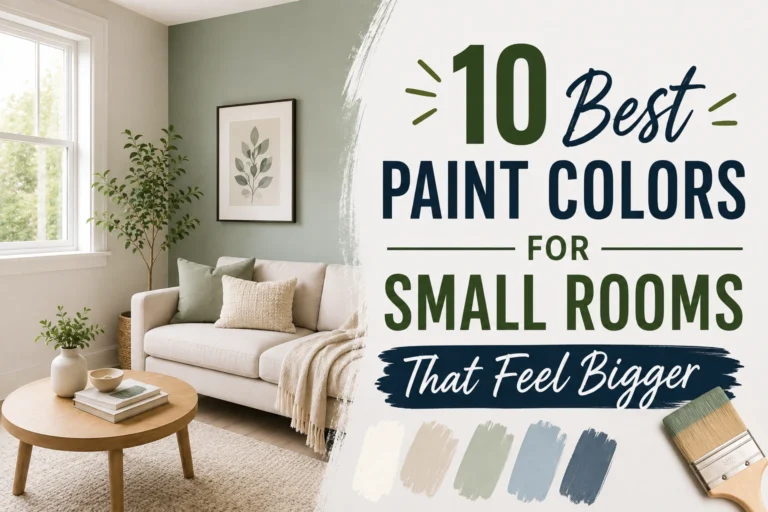
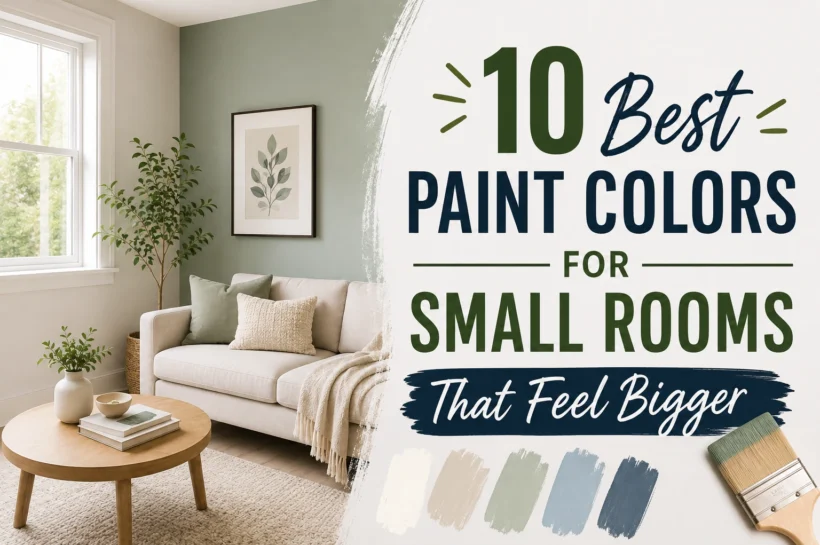

10 Best Paint Colors for Small Rooms That Feel Bigger
Choosing the right paint color is one of the easiest and most affordable ways to transform a small room. While furniture and décor play an important role, wall color has the greatest impact on how spacious, bright, and inviting a room feels. The right shade can reflect natural light, create visual depth, and even influence your mood. Whether you’re updating a bedroom, living room, bathroom, kitchen, or home office, selecting the best paint color can make a noticeable difference without changing the room’s layout.
In this guide, you’ll discover the best paint colors for small rooms, learn how lighting affects color choices, compare popular shades, and get expert tips to help every small space feel larger and more comfortable.
Best Paint Colors for Small Rooms
The best paint colors for small rooms are those that maximize light, reduce visual clutter, and create a sense of openness. Light colors are often the safest choice because they reflect more light than dark shades, making walls appear farther apart. However, that doesn’t mean you’re limited to white. Soft neutrals, warm beige, gentle blues, calming greens, and even carefully selected dark accent colors can work beautifully in compact spaces.
Professional interior designers often recommend considering your room’s natural light, furniture, flooring, and overall décor before choosing a paint color. According to color experts, paint is not just decorative it influences how people perceive the size and atmosphere of a room. By selecting the right shade, you can create a brighter, more balanced space that feels larger than it actually is.
Why Paint Color Matters in Small Rooms
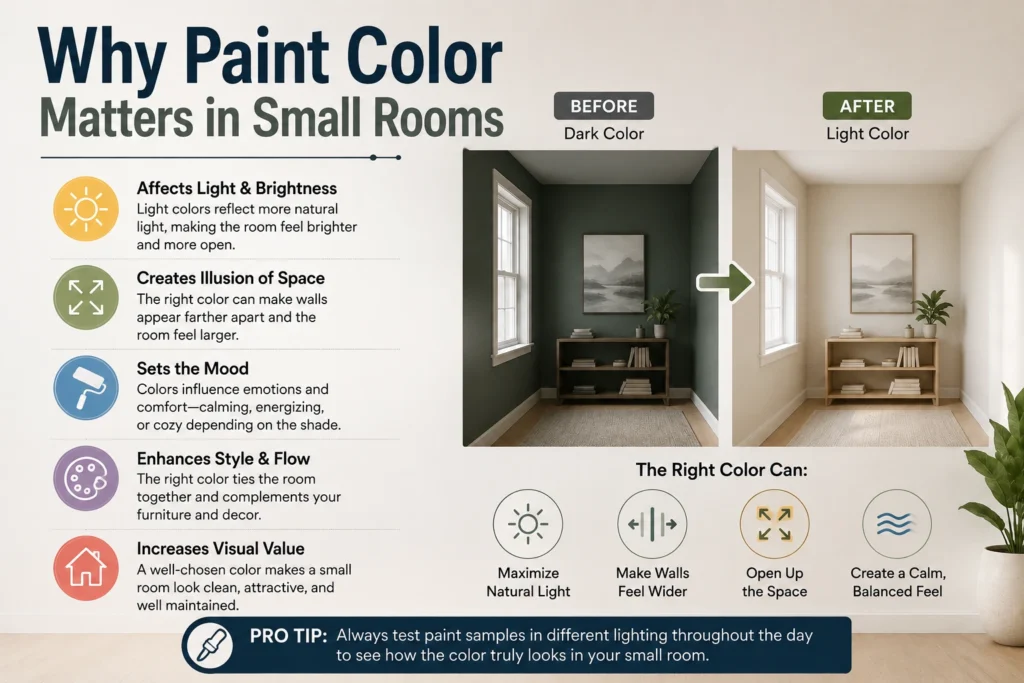
Paint color affects much more than appearance. It changes how your eyes perceive depth, brightness, and proportions. Colors with higher light reflectance values (LRV) bounce more light around a room, making walls seem farther apart and reducing the feeling of confinement. This is why lighter shades are commonly used in apartments, condos, and compact homes.
Research from color and paint manufacturers, including Sherwin-Williams and Benjamin Moore, shows that natural light, undertones, and paint finish all influence the final appearance of a color. A shade that looks warm in one room may appear cooler in another depending on sunlight exposure. Instead of choosing a color from a paint chip alone, always test samples on multiple walls and observe them throughout the day to ensure they complement your lighting conditions.
💚 You might also like: Best Smart Home Devices for Beginners (2026 Guide)
Best Paint Colors for Small Rooms
Not every light color performs the same way. Some shades make a room feel fresh and airy, while others create warmth, elegance, or subtle contrast. The best option depends on your lighting, furniture, and personal style. Below are some of the most effective paint color categories that consistently work well in small spaces and are recommended by interior designers.
White and Off-White Colors
White and off-white paint colors remain the most popular choice for small rooms because they reflect the greatest amount of light. Shades such as warm white, ivory, and soft cream brighten walls without feeling overly stark. They also pair easily with almost any furniture style or accent color, making future decorating updates simple while helping the room appear larger and cleaner.
Warm Neutral Colors
Warm neutrals like beige, taupe, sand, and light cream create a welcoming atmosphere while maintaining an open feel. Unlike bright white, these shades add softness and comfort without making a small room feel crowded. They work especially well in living rooms and bedrooms where a cozy, relaxing environment is preferred, complementing both modern and traditional interiors.
Gray and Greige Colors
Soft gray and greige have become popular because they offer a clean, contemporary look without overwhelming compact spaces. Greige combines gray and beige, providing the perfect balance between cool and warm tones. These versatile colors coordinate easily with wood furniture, metal accents, and neutral décor, making them an excellent long-term choice for homeowners seeking timeless style.
Light Blue and Green Colors
Soft blue and gentle green shades bring a calm, refreshing feel that naturally suits smaller rooms. Colors inspired by the sky, ocean, or nature can create the illusion of greater depth while promoting relaxation. These shades are particularly effective in bedrooms, bathrooms, and home offices where a peaceful atmosphere improves comfort and productivity without sacrificing brightness.
Dark Colors for Accent Walls
Dark colors can work surprisingly well in small rooms when used strategically. Instead of painting every wall, consider using navy, charcoal, or deep green on a single accent wall to create depth and visual interest. Pairing darker shades with lighter surrounding walls, ample natural light, and minimal décor prevents the room from feeling enclosed while adding a sophisticated, designer-inspired finish.
Selecting Paint Colors Based on Natural Light
Natural light has a significant impact on how paint colors appear throughout the day. The same shade can look warm in the morning, neutral in the afternoon, and slightly cooler in the evening. Before making a final decision, observe how much sunlight your room receives and which direction the windows face. North-facing rooms typically benefit from warmer colors, while south-facing rooms can handle cooler shades because they receive abundant natural light. Testing paint samples on different walls for at least 24 hours helps you see how changing light conditions affect the final result, leading to a more confident choice.
Best Paint Colors for Different Rooms
Every room serves a different purpose, so the ideal paint color should match both its function and available space. While lighter shades generally make rooms feel larger, the right undertones can also improve comfort and visual balance. Bedrooms often benefit from calming colors, while kitchens and living rooms usually look best with brighter, welcoming tones. Choosing colors based on each room’s use creates a consistent flow throughout your home while ensuring every small space feels open, stylish, and comfortable.
Small Living Room
A small living room should feel open and inviting since it’s often the most frequently used space in the home. Soft white, light greige, warm beige, and pale gray are excellent choices because they reflect light and complement various furniture styles. Adding colorful cushions, artwork, or rugs provides personality without making the room feel visually crowded.
Small Bedroom
Bedrooms benefit from soothing colors that encourage relaxation and restful sleep. Soft blue, sage green, warm ivory, and muted greige create a peaceful atmosphere while maintaining a bright appearance. Pairing these shades with light-colored bedding and simple décor helps the room feel larger, cleaner, and more comfortable without overwhelming the limited space.
Small Bathroom
Bathrooms usually have limited natural light, making paint selection especially important. Crisp white, pale gray, light aqua, and soft cream brighten the room while creating a fresh, clean appearance. Moisture-resistant paint with a satin or semi-gloss finish also improves durability and makes cleaning easier in humid environments.
Small Home Office
A productive workspace should feel bright without becoming distracting. Soft gray, muted green, light blue, and warm white create a balanced environment that supports focus and creativity. These colors reduce visual fatigue during long work sessions while keeping the office feeling spacious, organized, and professional.
Small Kitchen
Light-colored kitchens appear cleaner and more spacious. White, cream, pale beige, and soft sage green reflect available light and pair beautifully with wood, quartz, or marble countertops. Using matching cabinet and wall colors can also reduce visual breaks, making compact kitchens feel larger and more seamless.
Best Paint Colors for Small Rooms Comparison Table
Choosing the right paint color becomes easier when you compare the strengths of each option. The table below highlights how different color categories perform in terms of brightness, mood, and the type of room they suit best.
| Paint Color | Best For | Brightness | Creates Spacious Feel | Overall Style |
| White & Off-White | Any small room | Excellent | ⭐⭐⭐⭐⭐ | Clean & Timeless |
| Warm Beige | Living rooms | Very High | ⭐⭐⭐⭐☆ | Cozy & Classic |
| Greige | Modern homes | High | ⭐⭐⭐⭐☆ | Elegant & Versatile |
| Soft Gray | Home offices | High | ⭐⭐⭐⭐☆ | Contemporary |
| Light Blue | Bedrooms | High | ⭐⭐⭐⭐⭐ | Calm & Airy |
| Sage Green | Bedrooms & offices | Medium-High | ⭐⭐⭐⭐☆ | Natural & Relaxing |
| Soft Cream | Kitchens | High | ⭐⭐⭐⭐☆ | Warm & Bright |
| Navy (Accent Wall) | Feature walls | Low | ⭐⭐⭐☆☆ | Bold & Sophisticated |
Are Dark Paint Colors Good for Small Rooms?
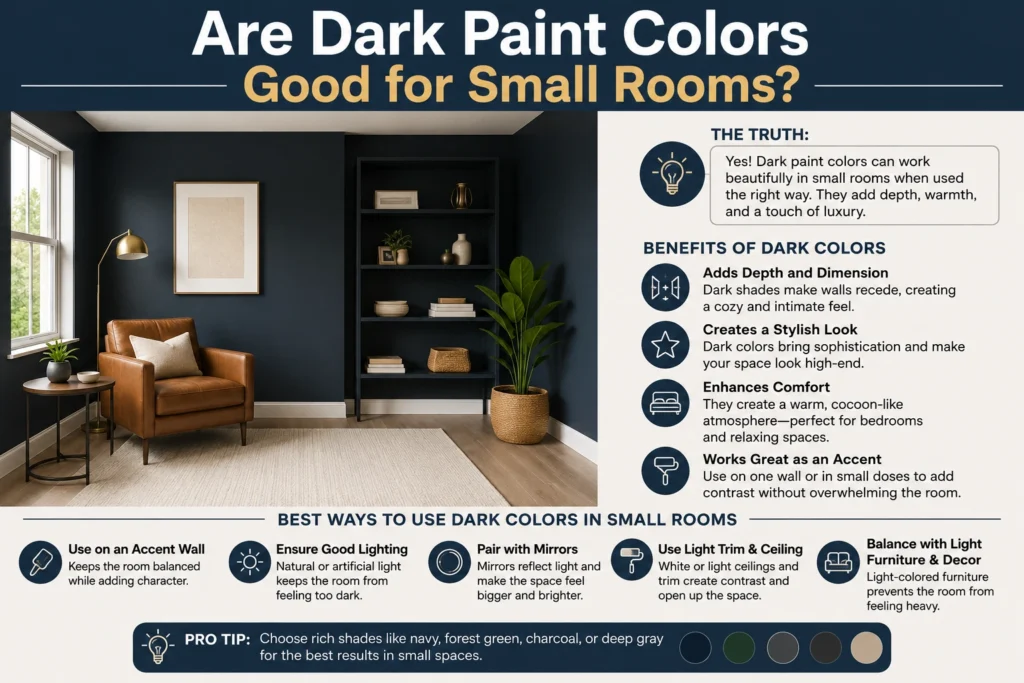
Dark paint colors often get a bad reputation for making rooms feel smaller, but that’s not always true. When used thoughtfully, deeper shades can add depth, contrast, and sophistication. Interior designers frequently use dark colors on one accent wall to create the illusion of distance, making the room appear more dimensional. The key is balance. Pair dark paint with light-colored ceilings, trim, flooring, and furniture to maintain brightness. Adequate natural lighting and well-placed mirrors also help reflect light, preventing the space from feeling enclosed. When combined correctly, dark colors can give small rooms a luxurious and modern appearance.
💚 You might also like: 5 Best Tips to Make Your Home Clean Fast
Best Paint Finish for Small Rooms
The paint finish you choose is just as important as the color itself. Eggshell and satin finishes are popular for most small rooms because they offer a soft sheen that reflects light without highlighting wall imperfections. Matte finishes create a smooth, elegant appearance but are better suited for low-traffic areas since they can be harder to clean. Semi-gloss finishes work well in bathrooms, kitchens, and trim because they resist moisture and wipe clean easily. Selecting the right finish enhances your paint color while improving durability and overall room appearance.
Common Mistakes to Avoid When Choosing Paint Colors
Many homeowners assume that simply choosing white paint will automatically make a room look bigger, but the reality is more nuanced. Ignoring natural light, selecting the wrong undertones, or skipping paint samples can lead to disappointing results. Another common mistake is using too many contrasting colors, which breaks up the space and makes it feel smaller. Dark ceilings, heavy trim colors, and glossy finishes on uneven walls can also reduce the sense of openness. Before committing to a color, test several samples in different lighting conditions and consider how they coordinate with your flooring, furniture, and décor for a cohesive look.
Tips to Make a Small Room Look Bigger with Paint
Paint can completely change the perception of a room when used strategically. Choose light or medium-tone colors with high light reflectance to brighten the space and create visual depth. Painting the walls, trim, and even the ceiling in similar shades minimizes harsh contrasts and helps the room feel more seamless. Vertical stripes or subtle color blocking can draw the eye upward, making ceilings appear taller. Pair your paint with mirrors, natural lighting, and simple furnishings to maximize the spacious effect. These small design choices work together to create a room that feels open, balanced, and inviting without requiring expensive renovations.
Frequently Asked Questions
What is the best paint color for a small room?
Soft white, off-white, light greige, pale gray, and warm beige are among the best choices because they reflect more light and create the illusion of a larger, brighter space.
Should the Ceiling Match the Wall Color?
In many small rooms, using the same color or a slightly lighter shade on the ceiling creates a smooth visual transition that makes the room feel taller and more open.
Can dark paint colors work in a small room?
Yes. Dark colors can work well when used on a single accent wall or in rooms with plenty of natural light. Balancing them with lighter furniture and trim prevents the space from feeling enclosed.
Which paint finish is best for small rooms?
Eggshell and satin finishes are ideal for most small rooms because they offer a subtle sheen, reflect light gently, and are easier to clean than flat or matte finishes.
Conclusion
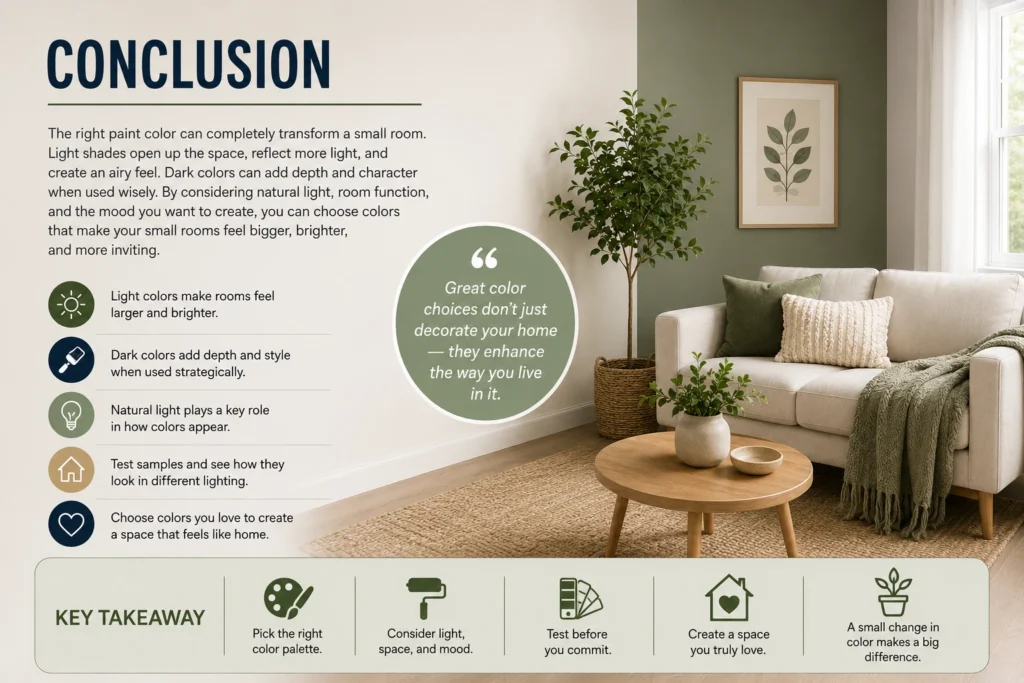
The best paint colors for small rooms do more than enhance appearance; they influence how spacious, comfortable, and welcoming a space feels. While light shades such as white, greige, beige, soft blue, and sage green remain popular choices, the perfect color ultimately depends on your room’s lighting, function, and personal style. Taking time to test paint samples, choose the right finish, and coordinate colors with your existing décor will help you achieve professional-looking results. With thoughtful planning, even the smallest room can feel brighter, larger, and more inviting, proving that the right paint color is one of the most effective upgrades you can make to your home.
✨ Want bite-sized tech wisdom? Follow house on stars