
Why Keeping Your Home Clean Matters More Than You Think
A clean home is about much more than appearance. It creates a healthier, safer, and more comfortable environment for everyone in your household. Dust, pet dander, mold spores, bacteria, and allergens can build up quickly when regular cleaning is ignored, affecting indoor air quality and overall well-being. According to the U.S. Environmental Protection Agency (EPA), indoor air can contain higher concentrations of pollutants than outdoor air, making routine cleaning an important part of maintaining a healthy home. Beyond health, an organized and clean space reduces stress, saves time, and makes everyday tasks easier. Whether you live in a small apartment or a large family home, consistent cleaning habits improve both your home’s appearance and your quality of life.
Keeping your home clean helps reduce allergens, bacteria, and viruses that may contribute to illness. Vacuuming carpets, disinfecting high-touch surfaces, and improving ventilation support better indoor air quality. The Centers for Disease Control and Prevention (CDC) also recommends routine cleaning of frequently touched surfaces to reduce the spread of germs, especially during cold and flu season.
A clean environment creates a more relaxing atmosphere and makes daily activities easier. Research published by Princeton University Neuroscience Institute suggests that excessive clutter competes for your attention, reducing focus and productivity. An organized home also makes it easier to find everyday items, lowering frustration and creating a greater sense of control over your surroundings.
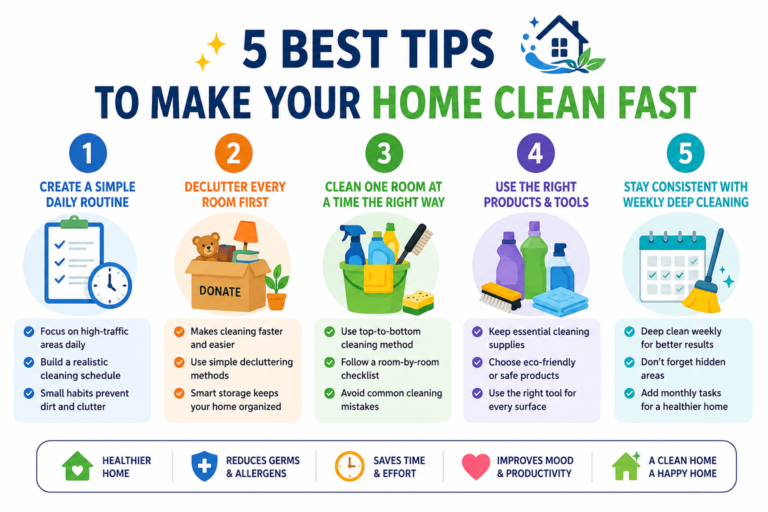
Tip #1: Create a Simple Daily Cleaning Routine
One of the easiest ways to maintain a clean home is by following a consistent daily cleaning routine. Instead of waiting until dirt and clutter become overwhelming, spend just 15 to 20 minutes each day handling small cleaning tasks. Wipe kitchen counters, wash dishes, make beds, and put items back where they belong. Breaking cleaning into manageable steps prevents large messes from building up and reduces the need for lengthy weekend cleaning sessions. A realistic routine also helps every family member contribute, making home maintenance faster, easier, and far less stressful throughout the week.
Focus on High-Traffic Areas Every Day
High-traffic spaces like the kitchen, bathroom, entryway, and living room collect dirt, dust, and germs faster than other rooms. Wiping surfaces, sweeping floors, and disinfecting frequently touched areas each day keeps these spaces fresh while preventing grime from spreading throughout the rest of your home.
Build a Realistic Cleaning Schedule You Can Stick To
Avoid creating an unrealistic cleaning plan that becomes difficult to maintain. Assign specific tasks to different days, such as vacuuming on Monday or cleaning bathrooms on Wednesday. A flexible weekly schedule makes cleaning feel manageable and helps build long-term habits without causing burnout.
Daily Habits That Prevent Dirt and Clutter
Simple habits make a significant difference over time. Remove shoes at the door, clean spills immediately, return items after use, and sort mail daily instead of letting it pile up. These small actions minimize clutter, reduce cleaning time, and help your home stay organized every day.
Tip #2: Declutter Every Room Before You Start Cleaning
Cleaning around unnecessary items wastes both time and energy. Before dusting, vacuuming, or disinfecting, remove items that no longer belong in the room. Decluttering creates easier access to surfaces, improves organization, and makes every cleaning task more efficient. Professional organizers often recommend decluttering before deep cleaning because it allows you to clean thoroughly without constantly moving objects. Whether it’s clothes, paperwork, toys, or kitchen gadgets, keeping only what you regularly use makes your home feel larger, cleaner, and easier to maintain throughout the year.
Why Decluttering Makes Cleaning Faster
Less clutter means fewer obstacles when dusting, vacuuming, or mopping. Open surfaces are easier to sanitize, and fewer unnecessary belongings reduce the amount of dust that accumulates. Decluttering also helps identify forgotten areas that need regular attention during your cleaning routine.
Easy Decluttering Methods for Every Room
Start with one small area instead of tackling your entire house at once. Use the “Keep, Donate, Recycle, and Trash” method to quickly sort belongings. Completing one drawer, shelf, or closet at a time keeps the process manageable and prevents feeling overwhelmed.
Smart Storage Solutions to Keep Your Home Organized
Use labeled bins, drawer organizers, storage baskets, under-bed containers, and shelving units to maximize available space. Store seasonal items separately and keep frequently used essentials within easy reach. Smart storage systems reduce visible clutter and make everyday cleaning much quicker and more efficient.
Tip #3: Follow a Room-by-Room Cleaning Strategy
Cleaning your entire house at once often feels overwhelming and leads to unfinished work. Instead, focus on completing one room before moving to the next. Following a systematic cleaning order improves efficiency and ensures that dirt isn’t transferred back onto already cleaned surfaces. Professional cleaners typically recommend cleaning from top to bottom and from dry tasks to wet tasks. This method allows dust to settle before vacuuming or mopping, helping you achieve a deeper clean with less effort while avoiding unnecessary repetition.
The Top-to-Bottom Cleaning Method Explained
Always begin with ceiling fans, shelves, light fixtures, and other elevated surfaces before cleaning furniture and floors. Dust naturally falls downward, so cleaning from the highest point to the lowest prevents you from having to reclean lower surfaces after finishing upper areas.
Room-by-Room Cleaning Checklist
Start by removing clutter, then dust furniture, wipe surfaces, disinfect high-touch areas, clean mirrors, vacuum carpets, and finish by mopping hard floors. Following the same checklist for every room creates consistency, improves efficiency, and helps ensure no important task gets overlooked.
Common Cleaning Mistakes to Avoid
Avoid using dirty cleaning cloths, applying excessive cleaning products, skipping frequently touched surfaces, or vacuuming before dusting. These common mistakes can spread dirt instead of removing it, reduce cleaning effectiveness, and increase the amount of time needed to complete household chores.
Tip #4: Use the Right Cleaning Products and Tools
Choosing the proper cleaning supplies makes every task easier while protecting your home’s surfaces from unnecessary damage. Different materials require different cleaning solutions, and using the wrong product may cause discoloration, scratches, or permanent wear. Build a basic cleaning kit that includes microfiber cloths, an all-purpose cleaner, glass cleaner, disinfectant, vacuum cleaner, mop, scrub brushes, and gentle surface-specific products. Investing in quality tools not only improves cleaning results but also reduces physical effort, saves time, and extends the lifespan of furniture, flooring, countertops, and household fixtures.
Essential Cleaning Supplies Every Home Needs
Every household should keep microfiber cloths, a vacuum with HEPA filtration, a mop, a bucket, scrub brushes, baking soda, white vinegar, disinfectant spray, glass cleaner, rubber gloves, and an all-purpose cleaner. These basic supplies cover most daily and weekly household cleaning tasks effectively.
Eco-Friendly vs. Commercial Cleaning Products
Eco-friendly cleaners often contain biodegradable ingredients and produce fewer harsh chemical fumes, making them a popular option for families with children or pets. Commercial cleaners may provide stronger disinfecting power for specific situations. Choose products based on the surface, cleaning objective, and manufacturer recommendations.
Choosing the Right Tool for Every Surface
Use microfiber cloths for electronics and dusting, soft sponges for delicate countertops, non-scratch scrub pads for bathroom fixtures, HEPA vacuums for carpets, and specialized wood cleaners for hardwood furniture. Matching the right tool to each surface improves cleaning performance while preventing unnecessary damage.
Tip #5: Keep Your Home Clean with Weekly Deep Cleaning
Daily cleaning keeps visible messes under control, but weekly deep cleaning removes hidden dirt, bacteria, and allergens that gradually accumulate throughout your home. Tasks like scrubbing bathroom grout, vacuuming under furniture, washing bedding, disinfecting trash cans, and cleaning appliances help maintain a healthier indoor environment. According to the American Cleaning Institute (ACI), combining daily maintenance with weekly deep cleaning significantly improves household hygiene and extends the lifespan of household surfaces and appliances. Creating a recurring weekly checklist prevents dirt from becoming difficult to remove, saves time in the long run, and keeps every room consistently fresh, organized, and inviting throughout the year.
Areas Most People Forget to Deep Clean
Many homeowners overlook ceiling fans, air vents, light switches, door handles, baseboards, window tracks, remote controls, garbage cans, and behind large appliances. These neglected areas collect dust, grease, and bacteria over time. Including them in your weekly cleaning routine helps maintain better hygiene and improves your home’s overall cleanliness.
Weekly Tasks That Keep Dirt from Building Up
Wash bed linens, vacuum upholstery, mop floors, disinfect bathroom fixtures, wipe kitchen appliances, clean mirrors, empty trash bins, and sanitize high-touch surfaces weekly. These recurring tasks prevent stubborn grime from accumulating and make regular home maintenance much easier and less time-consuming.
Monthly Cleaning Jobs Worth Adding to Your Routine
Each month, clean refrigerator coils, wash curtains, vacuum mattresses, organize closets, wipe cabinet interiors, clean windows, replace HVAC filters when needed, and inspect hidden corners for mold or moisture. Monthly maintenance improves indoor air quality while helping your home stay cleaner year-round.
💚 You Might Also Like: 10 Low-Maintenance Landscaping Ideas for Beginners (2026 Guide)
Room-by-Room Home Cleaning Guide
Every room in your home has unique cleaning needs, so using the same method everywhere may not deliver the best results. A room-by-room approach ensures every space receives the attention it deserves while making cleaning feel more organized and manageable. Start with rooms that collect the most dirt, such as kitchens and bathrooms, before moving to bedrooms and living areas. Following a structured plan helps eliminate overlooked spots, improves efficiency, and creates a consistently clean environment throughout your entire home. It also makes establishing long-term cleaning habits much easier for busy households.
Kitchen Cleaning Tips
Wipe countertops daily, disinfect sinks, clean cutting boards, sanitize cabinet handles, and mop floors regularly. Remove expired food from the refrigerator and clean microwave interiors weekly. Since kitchens are food preparation areas, maintaining proper hygiene helps reduce bacteria and keeps your cooking space safe and pleasant.
Bathroom Cleaning Tips
Disinfect toilets, sinks, faucets, showers, and bathtubs every week. Clean mirrors, remove soap scum, wash bath mats, and improve ventilation to reduce mold growth. Keeping bathrooms dry after use also helps prevent mildew while maintaining a cleaner and healthier environment.
Bedroom Cleaning Tips
Wash bedding weekly, dust furniture, vacuum carpets, organize closets, and reduce clutter around bedside tables. According to the Asthma and Allergy Foundation of America (AAFA), washing bedding regularly helps reduce dust mites, which are a common indoor allergen affecting many households.
Living Room Cleaning Tips
Dust shelves, vacuum sofas, clean electronics with microfiber cloths, wipe coffee tables, and organize decorative items. Vacuum rugs thoroughly, especially if you have children or pets. Keeping this high-traffic area tidy creates a more comfortable and welcoming space for family and guests.
Entryway and Hallway Cleaning Tips
Sweep floors frequently, shake out doormats, organize shoes, disinfect door handles, and remove outdoor debris before it spreads throughout the house. Installing quality entrance mats can significantly reduce the amount of dirt tracked indoors, making the rest of your cleaning routine much easier.
Time-Saving Home Cleaning Hacks That Actually Work
Cleaning your home doesn’t have to consume your entire weekend. Using practical cleaning strategies allows you to achieve better results in less time while maintaining a consistently tidy home. Professional cleaners often rely on efficient systems rather than working harder. Group similar tasks together, keep cleaning supplies easily accessible, and clean as you go instead of waiting for messes to pile up. Small daily efforts combined with smart techniques reduce workload, improve organization, and help you maintain a cleaner living space without feeling overwhelmed by endless household chores.
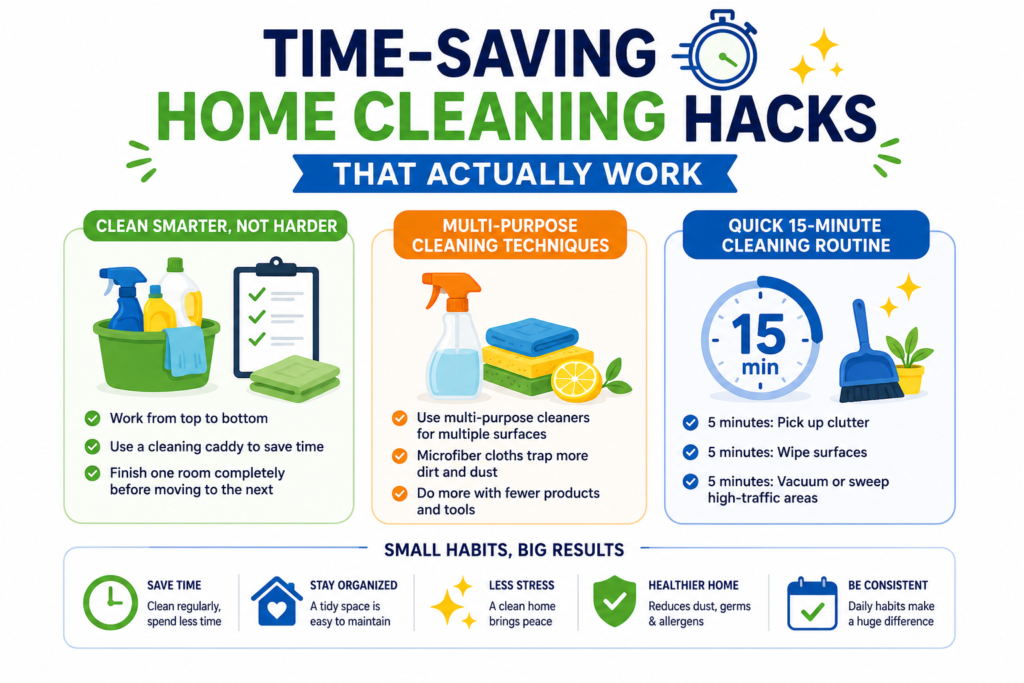
Clean Smarter, Not Harder
Work from top to bottom, carry a portable cleaning caddy, and use microfiber cloths that trap dust more effectively than traditional cloths. Finish one room completely before starting another to reduce unnecessary movement and improve cleaning efficiency throughout your home.
Multi-Purpose Cleaning Techniques
Choose versatile products that safely clean multiple surfaces instead of purchasing separate cleaners for every room. A quality all-purpose cleaner, microfiber cloths, and a vacuum with multiple attachments can handle most household cleaning tasks while reducing both costs and storage space.
Quick 15-Minute Cleaning Routine
Spend five minutes picking up clutter, five minutes wiping frequently used surfaces, and five minutes vacuuming or sweeping high-traffic areas. Completing this short routine daily prevents dirt from accumulating and significantly reduces the need for time-consuming deep cleaning sessions.
💚 You Might Also Like: Best Smart Home Devices for Beginners (2026 Guide)
Common Home Cleaning Mistakes That Make Your House Dirtier
Even with good intentions, certain cleaning mistakes can spread dirt instead of removing it. Using dirty tools, applying excessive cleaning products, skipping overlooked areas, or cleaning in the wrong order often reduces cleaning effectiveness. Learning proper techniques helps protect your home’s surfaces while improving hygiene and saving valuable time. Many professional cleaners emphasize that effective cleaning is about using the right methods consistently rather than simply spending more hours on household chores. Avoiding these common mistakes leads to better results with less effort and keeps your home cleaner for longer.
Using the Wrong Cleaning Products
Some cleaning chemicals can damage wood, stone, stainless steel, or natural surfaces. Use cleaning products exactly as directed by the manufacturer, and never mix bleach with ammonia since it can generate toxic fumes that are unsafe to breathe. Using surface-appropriate cleaners protects both your home and your health.
Forgetting High-Touch Surfaces
Light switches, doorknobs, refrigerator handles, cabinet pulls, remote controls, keyboards, and faucet handles are touched multiple times daily. The CDC recommends regularly cleaning and disinfecting frequently touched surfaces to reduce the spread of germs within households.
Cleaning in the Wrong Order
Dusting after vacuuming forces dust back onto freshly cleaned floors, creating unnecessary extra work. Following the correct sequence improves efficiency while delivering noticeably better cleaning results.
Ignoring Hidden Dirt and Dust
Dust accumulates beneath furniture, behind appliances, inside vents, under beds, and along baseboards. These hidden areas can negatively affect indoor air quality if ignored for long periods. Regularly including these overlooked spaces ensures a healthier and more thoroughly cleaned home.
Frequently Asked Questions About Home Cleaning
How Can You Keep Your Home Clean Every Day? ✅
The best strategy is maintaining small daily habits instead of allowing messes to accumulate. Make beds, wash dishes promptly, wipe kitchen counters, return items to their proper place, and spend 15 to 20 minutes completing basic cleaning tasks. Consistency makes long-term home maintenance significantly easier.
How Often Should You Deep Clean Your House?
Most homes benefit from weekly deep cleaning of kitchens, bathrooms, and high-traffic areas, while seasonal tasks like washing windows, cleaning behind appliances, and organizing storage spaces can be completed every few months.
Which Rooms Should Be Cleaned First?
Start with the kitchen and bathrooms because they accumulate the most bacteria, moisture, and daily use. Next, clean bedrooms, living rooms, and finally hallways or entryways. Following this order helps prioritize hygiene while making your cleaning routine more organized and efficient.
How to Choose the Right Cleaning Products for Your Home
A basic cleaning kit should include microfiber cloths, an all-purpose cleaner, disinfectant spray, glass cleaner, baking soda, white vinegar, a quality vacuum cleaner with HEPA filtration, and a microfiber mop. Choose products designed specifically for the surfaces you plan to clean.
How to Stay on Top of House Cleaning When Time Is Limited
Break cleaning into short daily sessions instead of dedicating entire weekends to household chores. Assign tasks to family members, follow a weekly checklist, clean while cooking, and immediately address small messes. These habits keep your home consistently clean without requiring large amounts of time.
Conclusion
Maintaining a clean home doesn’t require perfection—it requires consistency. By building simple daily habits, following a weekly deep cleaning schedule, using the right cleaning products, and avoiding common mistakes, you can create a healthier and more comfortable living environment. Research from organizations like the EPA, CDC, and American Cleaning Institute consistently highlights the importance of routine cleaning for improving indoor air quality and reducing the spread of germs. Whether you’re cleaning a small apartment or a large family home, these five practical tips provide a sustainable approach that saves time, reduces stress, and keeps your home looking its best all year.
✨ Want bite-sized tech wisdom? Follow house on stars