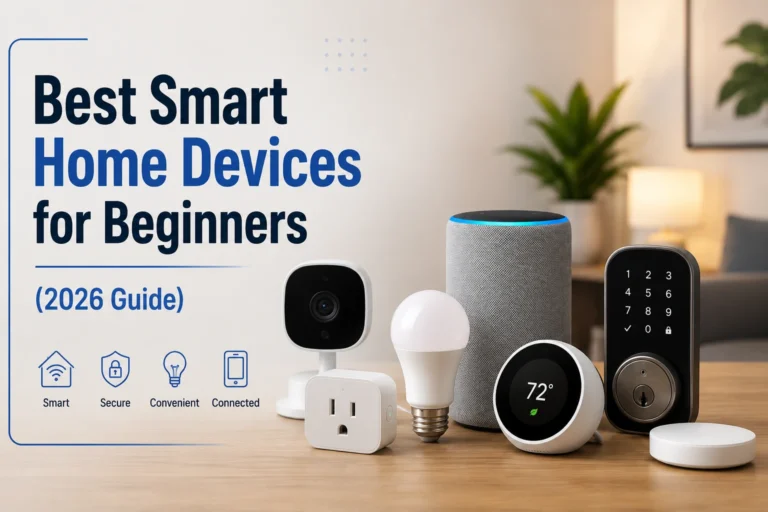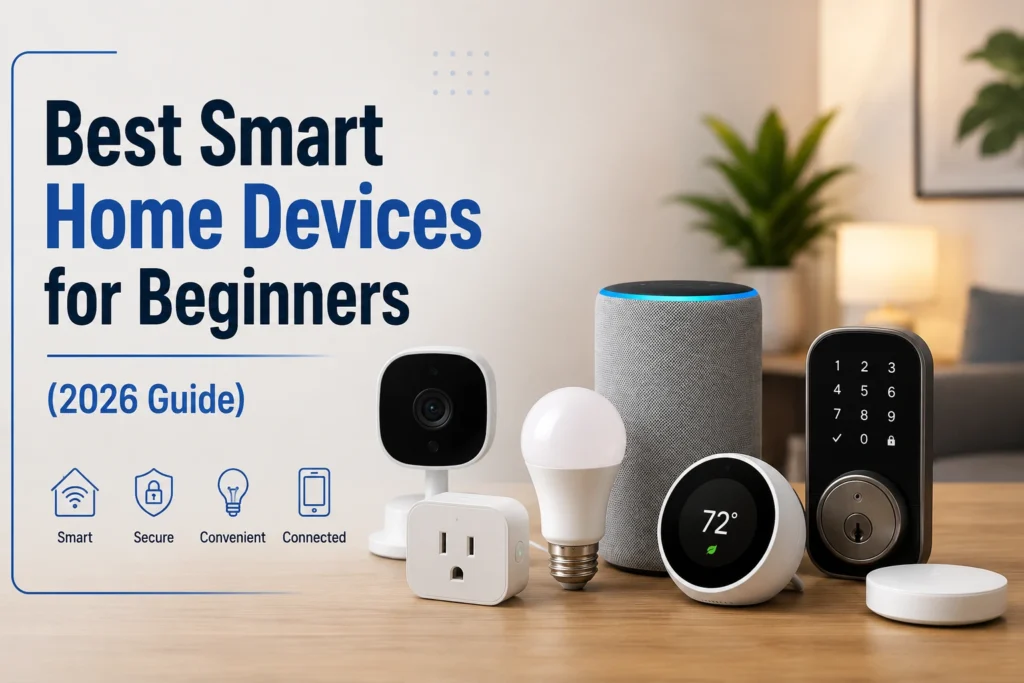
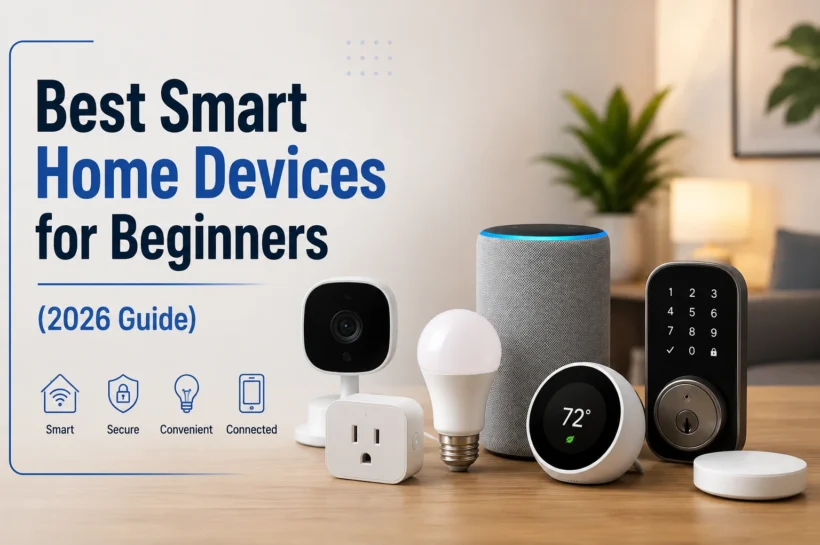

Best Smart Home Devices for Beginners (2026 Guide)
Smart home technology is no longer just for tech enthusiasts. Today, beginners can easily automate lighting, security, entertainment, and daily routines with affordable devices that take only a few minutes to install. According to industry research, the global smart home market is expected to continue growing rapidly as more households adopt connected devices for convenience, security, and energy efficiency. Whether you’re setting up your first smart speaker or planning a complete smart home system, choosing beginner-friendly products makes the experience much easier. This guide explains everything you need to know, from understanding smart home technology to selecting the best devices for your needs and budget.
What Are Smart Home Devices?
Smart home devices are internet-connected products that allow you to control and automate different parts of your home using a smartphone, tablet, or voice assistant. These devices communicate through Wi-Fi or other wireless technologies, making everyday tasks simpler and more convenient. For example, you can turn off lights remotely, lock your front door from anywhere, or receive alerts when someone approaches your home. Many devices also work together through automation, allowing multiple actions to happen with a single command. According to the Consumer Technology Association (CTA), smart home adoption continues to increase because homeowners value convenience, improved security, and greater energy efficiency. For beginners, smart home devices offer an easy way to modernize everyday living without requiring advanced technical knowledge.
Why Choose Smart Home Devices?
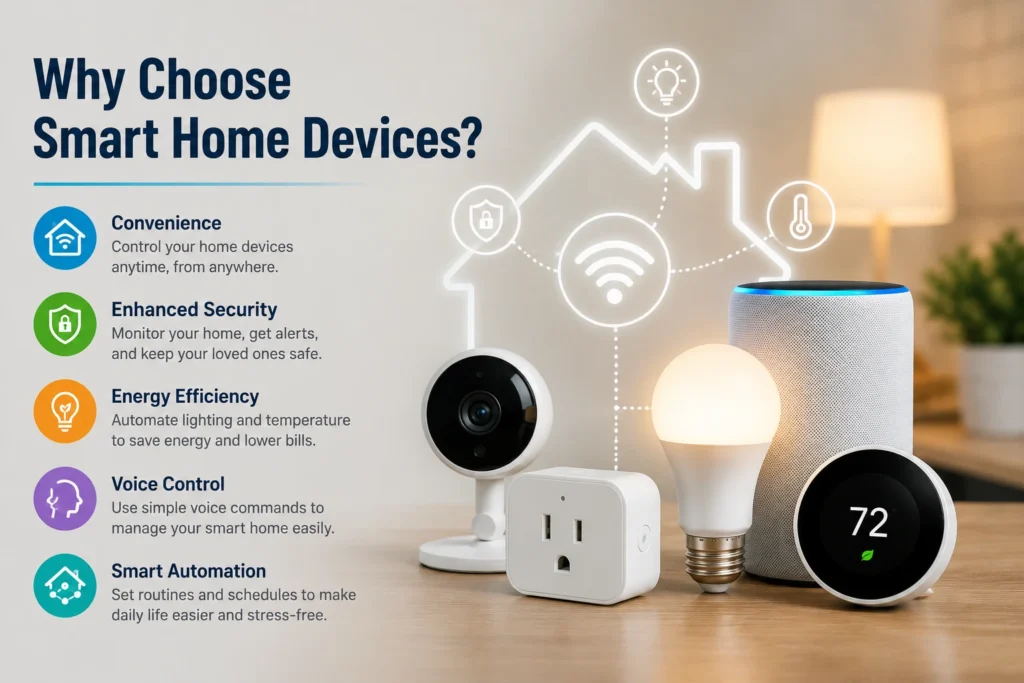
Smart home devices make daily life more comfortable while helping you save time and reduce unnecessary effort. Instead of manually controlling lights, thermostats, or security systems, you can automate them based on schedules or voice commands. Many smart devices also improve home security by sending instant notifications when unusual activity is detected. Energy-saving features, such as automated lighting and smart thermostats, can help lower electricity usage throughout the year. Research from the U.S. Department of Energy shows that smart thermostats can reduce heating and cooling energy consumption when used correctly. For beginners, these devices offer a practical introduction to home automation without requiring complicated installation or ongoing maintenance.
Things to Know Before Buying Smart Home Devices
Before purchasing your first smart home device, it’s important to understand how different products work together. Start by deciding which smart ecosystem you plan to use, such as Amazon Alexa, Google Home, or Apple Home. Device compatibility is equally important because not every product supports every platform. Consider your Wi-Fi coverage, as reliable internet connectivity is essential for smooth performance. You should also determine your budget and focus on devices that solve your everyday needs instead of buying unnecessary gadgets. Finally, choose products from trusted brands that regularly provide software and security updates. Making informed decisions at the beginning creates a smarter, more reliable home setup that can easily expand in the future.
10 Best Smart Home Devices for Beginners
Building your first smart home doesn’t require purchasing dozens of expensive gadgets. The best approach is to begin with practical devices that improve everyday convenience while remaining easy to install and manage. Each product below offers beginner-friendly features, reliable compatibility with major smart home ecosystems, and excellent long-term value. Starting with these essentials creates a strong foundation that you can expand over time as your automation needs grow.
Smart Speakers
Smart speakers serve as the central control hub for most beginner smart homes. Devices like Amazon Echo and Google Nest Audio allow you to control compatible products using simple voice commands. Besides playing music, they can answer questions, create reminders, manage shopping lists, and automate connected devices. Their easy setup and broad compatibility make them one of the first purchases recommended for new smart home users.
Smart Displays
Unlike standard smart speakers, smart displays include a touchscreen that provides visual control for your connected devices. You can view security camera feeds, make video calls, watch recipes while cooking, and manage smart home routines from a single screen. Their combination of voice control and visual interaction makes them especially helpful for beginners who prefer an easy-to-use interface.
Smart Bulbs
Smart bulbs are one of the easiest ways to experience home automation. They allow you to adjust brightness, change colors, create schedules, and control lighting remotely using a smartphone or voice assistant. Many models also support energy-efficient LED technology, helping reduce electricity consumption while improving convenience. Installation usually takes only a few minutes by replacing a standard light bulb.
Smart Plugs
Smart plugs instantly transform ordinary household appliances into smart devices without replacing existing equipment. Simply plug them into a wall outlet, connect them to your Wi-Fi network, and control lamps, coffee makers, fans, or other appliances remotely. Scheduled on-and-off routines also help reduce unnecessary energy usage, making smart plugs an affordable starting point for beginners.
Smart Security Cameras
Smart security cameras help you monitor your home whether you’re inside the house or miles away. Most beginner-friendly models offer HD or 2K video, motion detection, two-way audio, night vision, and instant mobile alerts. Some cameras also use AI to recognize people, pets, or packages, reducing unnecessary notifications. According to the FBI, homes without visible security measures are more likely to be targeted by burglars, making security cameras a valuable first investment. Modern cameras are simple to install and integrate seamlessly with popular smart home ecosystems, giving beginners greater peace of mind without complicated setup.
Video Doorbells
Video doorbells let you see, hear, and speak with visitors from anywhere using your smartphone. They provide live video, motion alerts, package monitoring, and recorded footage, making them useful for improving both security and convenience. Whether you’re at work or on vacation, you can answer the door remotely and monitor deliveries in real time. Many models integrate with smart speakers and displays, allowing voice announcements whenever someone rings the bell. Their simple installation and practical everyday benefits make video doorbells one of the most popular smart home upgrades.
Smart Locks
Smart locks eliminate the need to carry physical keys while giving you greater control over home access. You can lock or unlock your door remotely, create temporary access codes for guests, and receive notifications whenever someone enters or leaves. Many smart locks also support fingerprint recognition, PIN codes, or automatic unlocking when you arrive home. Built-in encryption and regular firmware updates improve security while maintaining convenience. For beginners, smart locks provide a simple way to improve home security without replacing their existing doors.
Smart Thermostats
Smart thermostats automatically adjust your home’s temperature based on your schedule, helping improve comfort while reducing energy costs. Instead of manually changing settings throughout the day, the thermostat learns your routine or follows custom schedules created in its companion app. The U.S. Environmental Protection Agency notes that ENERGY STAR-certified smart thermostats can help homeowners lower heating and cooling expenses through more efficient temperature management. Beginners appreciate their simple controls, smartphone access, and compatibility with major voice assistants, making climate control both smarter and more energy efficient.
Robot Vacuums
Robot vacuums make everyday cleaning almost effortless by automatically vacuuming your floors according to a schedule. Most beginner models use smart navigation to avoid obstacles, clean multiple rooms, and return to their charging dock when finished. Many also allow users to start, stop, or monitor cleaning sessions through a mobile app or voice assistant. Some advanced models even include mopping functions for added convenience. For busy households, robot vacuums save valuable time while helping maintain cleaner floors with very little daily effort.
Smart Sensors
Smart sensors quietly monitor your home and trigger automations when specific events occur. Motion sensors can turn lights on automatically, while door and window sensors send alerts if an entry point is opened unexpectedly. Water leak sensors help detect plumbing issues before they become expensive repairs, and temperature sensors monitor indoor conditions. These small devices work behind the scenes to make your home more responsive and secure. For beginners, smart sensors add powerful automation without requiring complicated installation or daily interaction.
Smart Home Device Prices
The cost of building a smart home depends on the number of devices you choose and the features you need. Beginners don’t have to spend thousands of dollars to enjoy the benefits of home automation. Starting with affordable products like smart bulbs, plugs, and speakers allows you to build a reliable system over time. Premium devices generally include advanced AI features, better build quality, and broader automation capabilities, while budget-friendly models provide the essential functions most homeowners need. The comparison table below will help you understand typical price ranges and plan your smart home investment more effectively.
Pricing Comparison Table
| Device | Budget | Mid-Range | Premium |
| Smart Speaker | $30–$60 | $70–$120 | $150–$250 |
| Smart Bulb | $10–$20 | $25–$40 | $45–$70 |
| Smart Plug | $10–$20 | $20–$35 | $35–$60 |
| Smart Security Camera | $35–$70 | $80–$180 | $200–$400 |
| Video Doorbell | $60–$120 | $130–$220 | $250–$400 |
| Smart Lock | $80–$150 | $160–$250 | $300–$450 |
| Smart Thermostat | $70–$150 | $160–$250 | $250–$400 |
| Robot Vacuum | $150–$300 | $350–$700 | $800–$1,500 |
Best Smart Home Systems for Beginners
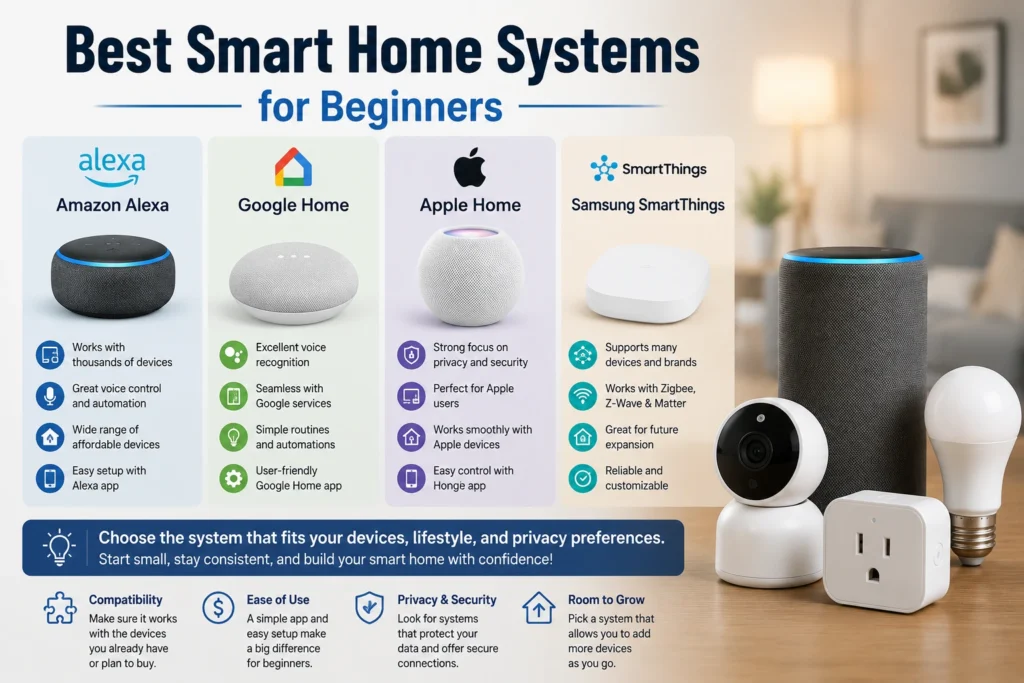
Choosing the right smart home system is one of the most important decisions for beginners because it determines how your devices work together. Amazon Alexa offers the widest device compatibility and is ideal for users who want flexibility. Google Home delivers excellent voice recognition and integrates naturally with Google services like Calendar and Maps. Apple Home works best for people already using iPhones, iPads, and other Apple products, with a strong focus on privacy and security. Samsung SmartThings supports a wide range of protocols, including Matter, Zigbee, and Z-Wave, making it an excellent option for users planning to expand their smart home over time. Selecting one ecosystem early helps ensure smoother automation and better long-term compatibility.
How to Set Up a Smart Home
Setting up a smart home is easier than many beginners expect. Start by selecting a single smart ecosystem, such as Amazon Alexa, Google Home, or Apple Home, and install its companion app on your smartphone. Connect one or two essential devices, like a smart speaker and smart bulbs, before expanding your setup. Ensure your Wi-Fi signal is strong enough to cover the areas where devices will be installed, and always update firmware to access the latest features and security improvements. Once your devices are connected, create simple automation routines, such as turning lights on at sunset or locking doors at bedtime. Beginning with a small, well-planned setup makes future upgrades much easier and provides a smoother smart home experience.
Common Smart Home Mistakes to Avoid
Many beginners make the mistake of buying devices without checking whether they are compatible with their chosen smart home ecosystem. Another common issue is relying on weak Wi-Fi coverage, which can cause devices to disconnect or respond slowly. Some users also ignore firmware updates, leaving their devices vulnerable to security risks and missing important feature improvements. Purchasing too many gadgets at once can make setup confusing and expensive. Instead, focus on solving everyday problems with a few reliable products before expanding your system. Planning ahead, using strong passwords, enabling two-factor authentication, and buying from trusted brands will help you build a secure, reliable, and easy-to-manage smart home.
Frequently Asked Questions
What is the best smart home device to buy first?
A smart speaker is usually the best first purchase because it acts as the control center for your smart home. It allows you to manage compatible devices using simple voice commands while making future expansion much easier.
Do smart home devices work without Wi-Fi?
Some smart devices continue performing basic functions without Wi-Fi, but most advanced features like remote control, automation, cloud storage, and voice assistant integration require a stable internet connection.
Which smart home system is best for beginners?
Amazon Alexa and Google Home are generally the easiest options for beginners because they support thousands of compatible devices, offer simple setup processes, and provide reliable voice control for everyday tasks.
Are smart home devices safe to use?
Yes, reputable smart home devices are generally safe when you use strong passwords, enable two-factor authentication, install firmware updates, and purchase products from trusted manufacturers that regularly release security patches.
Is it possible to build a smart home on a budget?
Absolutely. Many beginners start with affordable smart bulbs, plugs, and speakers before adding more advanced devices. Building your smart home gradually keeps costs manageable while still delivering meaningful convenience and automation.
Conclusion
Smart home technology has become more affordable, reliable, and beginner-friendly than ever before. By choosing compatible devices, selecting the right smart ecosystem, and starting with practical products like smart speakers, bulbs, and security cameras, you can create a connected home without unnecessary complexity. As your needs grow, you can gradually expand your setup with additional automation and security features. With careful planning and the right devices, building your first smart home is a worthwhile investment that improves convenience, comfort, energy efficiency, and everyday peace of mind.
✨ Smarter home decisions start with HouseonStars.