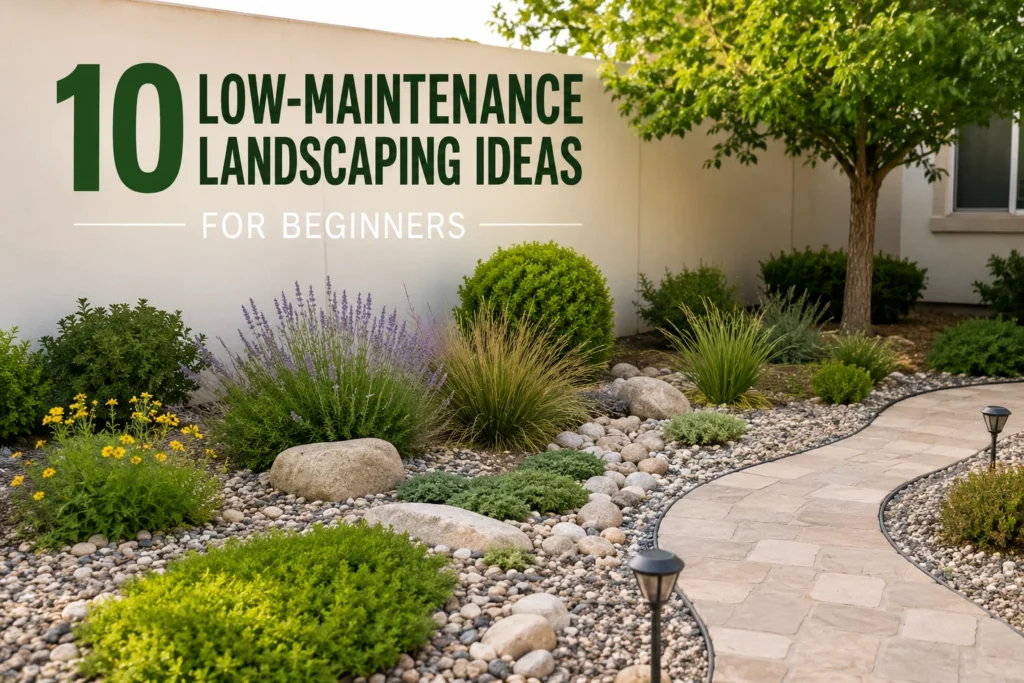

10 Low-Maintenance Landscaping Ideas for Beginners (2026 Guide)
Low-maintenance landscaping is a landscaping approach that reduces the time, effort, and resources needed to keep an outdoor space attractive throughout the year. Instead of relying on plants that require constant watering, mowing, pruning, or fertilizing, it focuses on hardy plants, smart layouts, mulch, and durable materials that naturally require less care. This makes it an excellent choice for beginners, busy homeowners, and anyone looking to enjoy a beautiful yard without spending every weekend on maintenance. According to the U.S. Environmental Protection Agency (EPA), landscaping practices such as using drought-tolerant plants and efficient irrigation can significantly reduce outdoor water use, making this approach both practical and environmentally responsible.
Benefits of Low-Maintenance Landscaping
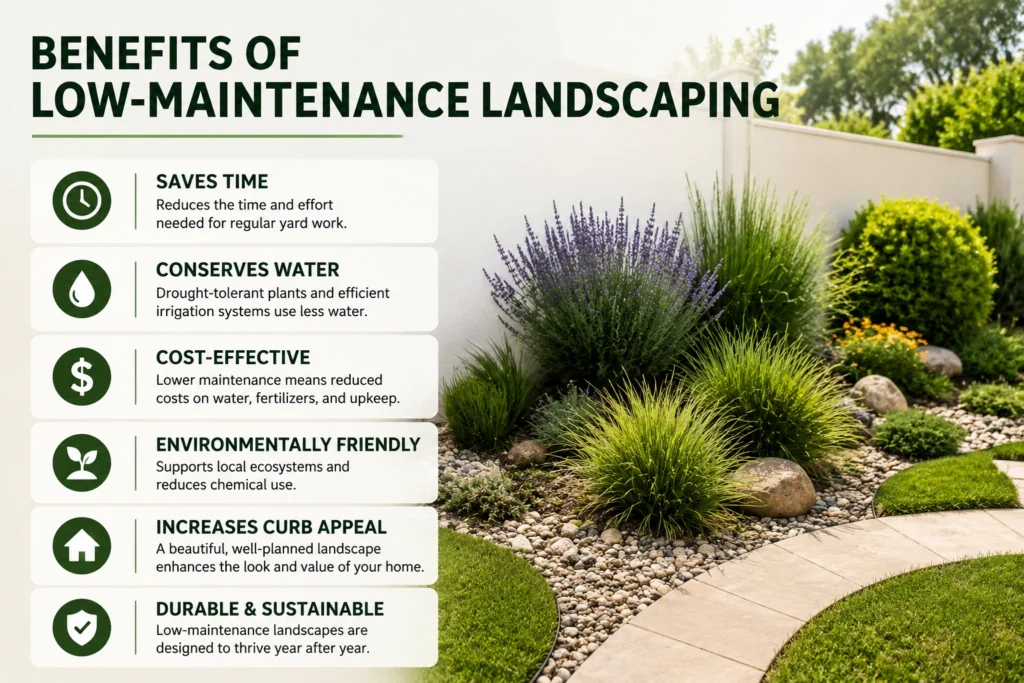
A low-maintenance landscape offers more than just convenience. It helps reduce weekly yard work, lowers water consumption, and minimizes ongoing maintenance expenses. Native and drought-tolerant plants typically adapt better to local conditions, reducing the need for fertilizers and frequent watering. Adding mulch helps retain soil moisture while limiting weed growth, saving both time and resources. Well-planned landscaping can also improve curb appeal and increase property value by creating a clean, organized outdoor space. Research from the National Association of Realtors (NAR) has shown that attractive landscaping can positively influence a home’s perceived value, making it a worthwhile long-term investment for homeowners.
💚 You might also like: Best Kitchen Cabinet Colors for Modern Homes (2026 Guide)
Planning Your Landscape
Before planting flowers or installing decorative features, take time to create a simple landscaping plan. Careful planning helps you choose the right plants, avoid unnecessary costs, and design a yard that remains easy to maintain over time. Consider your available space, sunlight, soil type, and drainage before making decisions. Setting a realistic budget also prevents overspending on features that require ongoing upkeep. A thoughtful plan ensures every plant and hardscape element has a purpose, resulting in a landscape that is attractive, functional, and suitable for your lifestyle. Spending extra time planning often saves considerable effort later.
Check Your Yard
Start by observing how much sunlight different areas receive throughout the day. Test your soil if possible and identify spots where water collects after rainfall. Understanding these conditions helps you choose plants that naturally thrive in your yard. Healthy plant placement reduces maintenance because suitable plants require less watering, fertilizing, and replacement than those growing in unfavorable conditions.
Set a Budget
Decide how much you want to invest before purchasing plants or landscaping materials. Prioritize long-lasting features such as mulch, native plants, stone pathways, and efficient irrigation systems. Starting with a realistic budget allows you to complete your project gradually without sacrificing quality. Investing wisely now can reduce future maintenance and replacement costs significantly.
Make a Simple Plan
Sketch a basic layout showing planting areas, pathways, seating spaces, and decorative features. Group plants with similar sunlight and watering needs together to simplify maintenance. Leave enough space for plants to reach their mature size without overcrowding. A simple design creates a cleaner appearance and makes future maintenance much easier, especially for beginners.
10 Low-Maintenance Landscaping Ideas
Creating a beautiful landscape doesn’t have to involve constant mowing, watering, or pruning. By choosing the right materials and plants, you can design an outdoor space that stays attractive with minimal effort throughout the year. The following beginner-friendly ideas focus on reducing maintenance while improving the overall appearance of your yard. Many professional landscapers recommend combining several of these techniques to build a landscape that is both practical and visually appealing. Whether you have a small front yard or a spacious backyard, these simple ideas can help you save time, reduce costs, and enjoy a healthier landscape.
Choose Native Plants
Native plants naturally adapt to your local climate, soil, and rainfall, making them one of the easiest choices for beginners. Because they evolved in your region, they usually require less watering, fertilizer, and pest control than non-native varieties. They also attract beneficial pollinators like bees and butterflies, helping support local ecosystems. Choosing native plants creates a healthier, more sustainable landscape that remains beautiful with minimal maintenance throughout the growing season.
Plant Drought-Tolerant Flowers
Drought-tolerant flowers are ideal for homeowners who want colorful gardens without frequent watering. Plants such as lavender, coneflowers, black-eyed Susans, and salvia thrive in dry conditions once established. Their deep root systems help them survive periods of low rainfall while maintaining healthy blooms. These flowers reduce water consumption and are excellent for creating vibrant landscapes that require little attention throughout the year.
Replace Grass with Ground Covers
Traditional lawns often require regular mowing, watering, fertilizing, and weed control. Replacing sections of grass with ground covers such as creeping thyme, clover, or sedum can significantly reduce maintenance.These low-growing plants spread easily, help keep weeds under control, and create a lush landscape with very little maintenance. Ground covers also improve soil stability and reduce erosion, making them a practical alternative to traditional turf.
Add Mulch to Garden Beds
Applying mulch around plants is one of the simplest ways to reduce landscape maintenance. Organic mulch helps retain soil moisture, regulates soil temperature, and prevents weed growth. As mulch gradually breaks down, it also improves soil quality by adding valuable organic matter. Refreshing mulch once or twice a year keeps planting beds neat while reducing the need for frequent watering and weeding.
Use Decorative Gravel or Stone
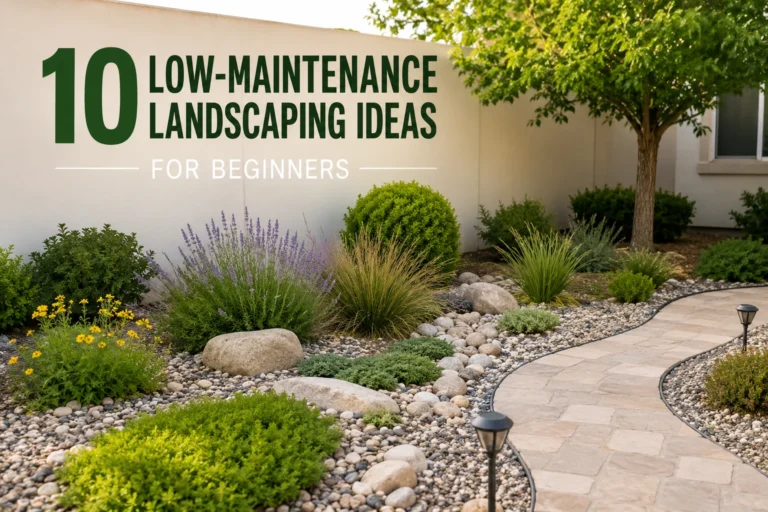
Decorative gravel, river rocks, and crushed stone provide an attractive, long-lasting alternative to grass in selected areas. These materials require very little maintenance and work well around pathways, patios, garden borders, and drought-tolerant plantings. Gravel also improves drainage and helps prevent soil erosion. Combined with carefully selected plants, stone landscaping creates a clean, modern appearance that lasts for years.
Install a Drip Irrigation System
A drip irrigation system delivers water directly to plant roots, reducing waste caused by evaporation and runoff. Unlike traditional sprinklers, drip irrigation provides slow and consistent watering that supports healthier root development. According to the U.S. Environmental Protection Agency (EPA) WaterSense program, efficient irrigation systems can help reduce unnecessary outdoor water use. This makes drip irrigation an excellent investment for low-maintenance landscapes.
Grow Low-Maintenance Shrubs
Evergreen and slow-growing shrubs provide year-round structure while requiring minimal pruning. Plants such as boxwood, juniper, dwarf yaupon holly, and spirea maintain their shape naturally and need less attention than fast-growing shrubs. They can be used as privacy screens, foundation plantings, or decorative borders, adding texture and greenery with very little ongoing maintenance.
Build Simple Walkways and Patios
Adding stone pathways, gravel walkways, or small patios reduces the amount of lawn that requires mowing and watering. Hardscape features also improve accessibility and define different areas of your landscape. Materials like natural stone, concrete pavers, and gravel are durable, weather-resistant, and require very little maintenance compared to living ground covers. A well-designed walkway also enhances curb appeal and increases usability.
Create Raised Garden Beds
Raised garden beds make gardening easier by improving soil drainage and reducing weed growth. They allow you to control soil quality while making planting, watering, and harvesting more comfortable. Because raised beds are easier to maintain than traditional in-ground gardens, they are an excellent option for beginners. Adding mulch inside raised beds further reduces weeds and helps retain soil moisture.
Group Plants by Water Needs
Placing plants with similar watering requirements together makes irrigation more efficient and prevents both overwatering and underwatering. This landscaping method, often called hydrozoning, allows each section of your yard to receive the right amount of water without wasting resources. Grouping plants according to their needs also promotes healthier growth, simplifies maintenance, and supports long-term water conservation.
Best Plants for Low-Maintenance Landscaping
Choosing the right plants is one of the most important steps in creating a landscape that stays healthy with minimal effort. Plants that naturally adapt to your local climate require less watering, fertilizing, and pest control than high-maintenance varieties. Native plants, drought-tolerant perennials, ornamental grasses, and evergreen shrubs are excellent options because they remain attractive throughout the seasons while demanding less care. The U.S. Department of Agriculture (USDA) recommends selecting plants based on your growing zone to improve survival rates and reduce maintenance. Mixing plants with different heights, colors, and bloom times also creates a landscape that looks vibrant year-round without requiring frequent replacements.
| Plant | Sunlight | Water Needs | Maintenance Level | Best Use |
| Lavender | Full Sun | Low | Very Low | Borders & Garden Beds |
| Coneflower | Full Sun | Low | Low | Flower Beds |
| Daylily | Full Sun to Partial Shade | Low | Low | Landscape Borders |
| Hosta | Partial to Full Shade | Moderate | Low | Shaded Areas |
| Juniper | Full Sun | Low | Very Low | Foundation Planting |
| Boxwood | Full Sun to Partial Shade | Moderate | Low | Hedges |
| Sedum | Full Sun | Very Low | Very Low | Rock Gardens |
| Black-Eyed Susan | Full Sun | Low | Low | Pollinator Gardens |
Common Landscaping Mistakes
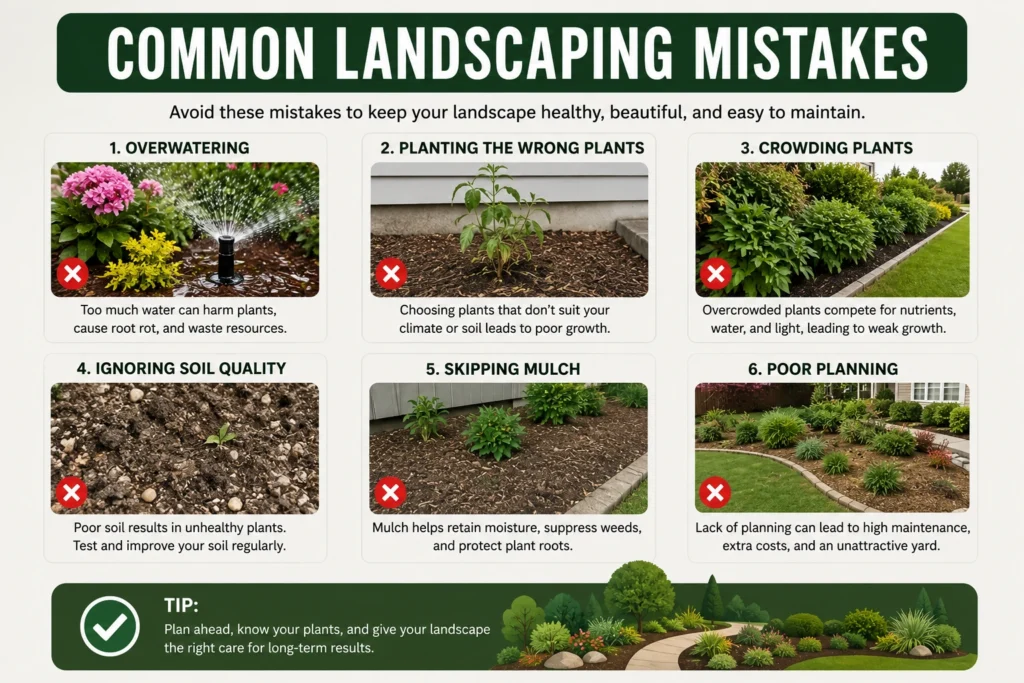
Even a simple landscape can become difficult to maintain if basic planning mistakes are overlooked. Many beginners purchase attractive plants without considering their mature size, water needs, or growing conditions. Others overcrowd planting beds, creating competition for nutrients and increasing disease risks. Overwatering is another common issue that weakens plant roots and encourages fungal problems. Avoiding these mistakes from the beginning helps plants establish more successfully while reducing maintenance in the future. Professional landscapers often recommend following the principle of “right plant, right place,” which improves plant health and minimizes unnecessary work throughout the growing season.
💚 You might also like: Walk-In Shower vs Bathtub: Which Is Better? | Expert Guide
Choosing the Wrong Plants
Selecting plants based only on appearance often leads to disappointment. Plants that are not suited to your climate or soil usually require extra watering, fertilizers, and pest treatments to survive. Instead, choose native or climate-adapted varieties that naturally thrive in your area. These plants establish faster, stay healthier, and require much less maintenance throughout the year.
Poor Plant Spacing
Planting flowers and shrubs too close together may look attractive at first, but overcrowding creates problems as plants mature. Poor air circulation can encourage fungal diseases and make plant maintenance more challenging. Always follow recommended spacing guidelines so each plant has enough room to grow naturally while keeping the landscape neat and easy to maintain.
Overwatering Plants
More water does not always mean healthier plants. Excessive watering can suffocate roots, promote root rot, and attract pests. Most drought-tolerant plants perform better when watered deeply but less frequently. Installing drip irrigation or watering early in the morning helps maintain proper soil moisture while conserving water and supporting stronger root development.
Budget-Friendly Landscaping Tips
You don’t need to spend a fortune to create an attractive and functional landscape. Start by improving one area at a time instead of redesigning the entire landscape. Reuse existing stones, bricks, or edging materials whenever possible, and choose native plants because they generally require fewer resources to maintain after establishment. Applying organic mulch reduces weed growth and helps retain moisture, lowering long-term maintenance costs. Purchasing smaller plants instead of mature specimens can also save money while allowing them to establish naturally over time. According to the EPA WaterSense program, efficient irrigation practices combined with drought-tolerant landscaping can significantly reduce outdoor water use, leading to lower utility bills while supporting sustainable gardening practices.
Seasonal Maintenance Tips
A low-maintenance landscape still benefits from simple seasonal care to keep plants healthy and attractive throughout the year. In spring, remove debris, refresh mulch, and inspect plants for winter damage. During summer, water deeply when needed and remove weeds before they spread. Fall is the ideal time to prune dead growth, divide perennials, and prepare plants for colder weather. In winter, protect sensitive plants with mulch and avoid unnecessary pruning. Following a seasonal routine prevents small issues from becoming costly problems while extending the life of your landscape. The Royal Horticultural Society (RHS) also recommends regular mulching and seasonal plant care to improve soil health and reduce ongoing maintenance over time.
Frequently Asked Questions
What is the easiest landscaping idea?
Using native plants with mulch is one of the easiest landscaping solutions because it reduces watering, weed growth, and regular maintenance while keeping your yard attractive.
Which plants need the least maintenance?
Lavender, sedum, juniper, daylilies, coneflowers, and ornamental grasses are among the easiest plants to grow since they require minimal watering and care once established.
How do I reduce landscape maintenance?
Choose native plants, install drip irrigation, apply mulch, group plants with similar water needs, and replace high-maintenance grass with ground covers or decorative stone.
Is low-maintenance landscaping expensive?
Not necessarily. While some features require an upfront investment, low-maintenance landscaping often reduces long-term costs by lowering water use, fertilizer needs, and routine maintenance expenses.
Conclusion
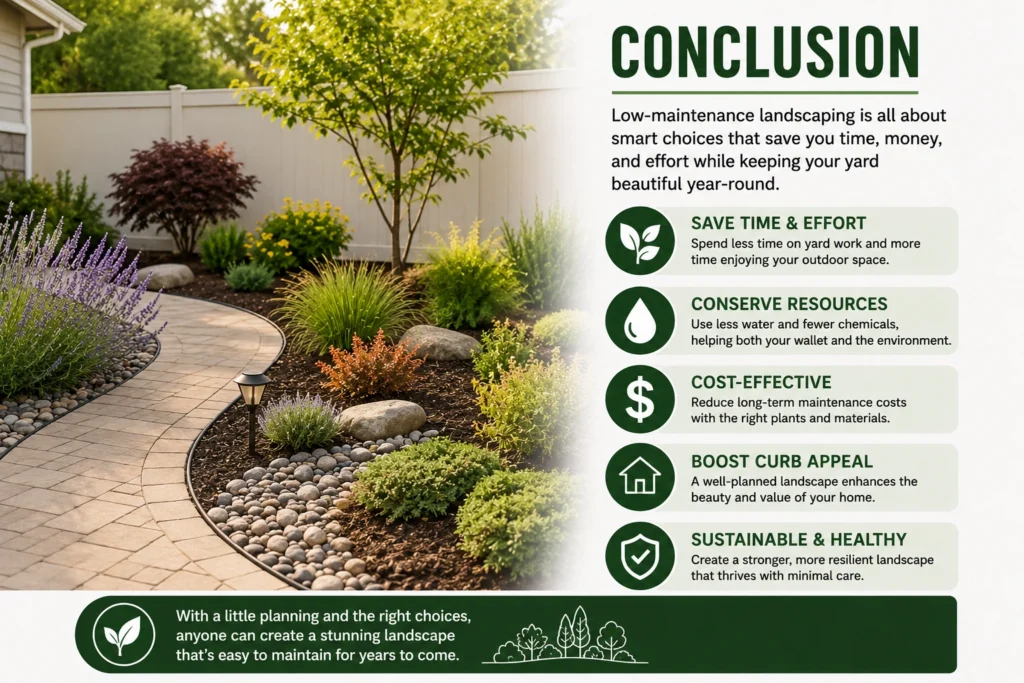
Creating a beautiful outdoor space doesn’t have to involve endless mowing, watering, or pruning. By choosing the right plants, planning your landscape carefully, and using practical features like mulch, ground covers, and efficient irrigation, beginners can build a yard that stays attractive with minimal effort. Start with a few simple improvements, expand your landscape over time, and focus on plants that naturally thrive in your local climate. With smart planning and consistent seasonal care, you’ll enjoy an attractive, low-maintenance landscape for years to come.
✨ Smarter home decisions start with HouseonStars.