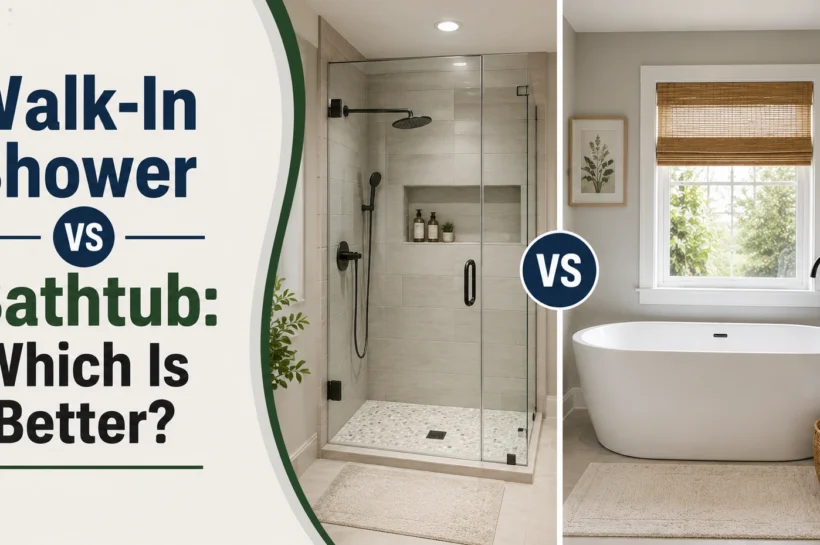

Walk-In Shower vs Bathtub: Which Is Better? | Expert Guide
Choosing between a walk-in shower and a bathtub is one of the biggest decisions during a bathroom remodel. Both options improve the look and function of your bathroom, but the right choice depends on your lifestyle, budget, available space, and long-term goals. Some homeowners prefer the convenience of a walk-in shower for everyday use, while others value the comfort and versatility of a bathtub. Understanding how each option performs in terms of cost, maintenance, accessibility, water use, and resale value will help you make a confident decision. This guide compares both in detail so you can choose the solution that best fits your home.
Walk-In Shower vs Bathtub: Key Differences
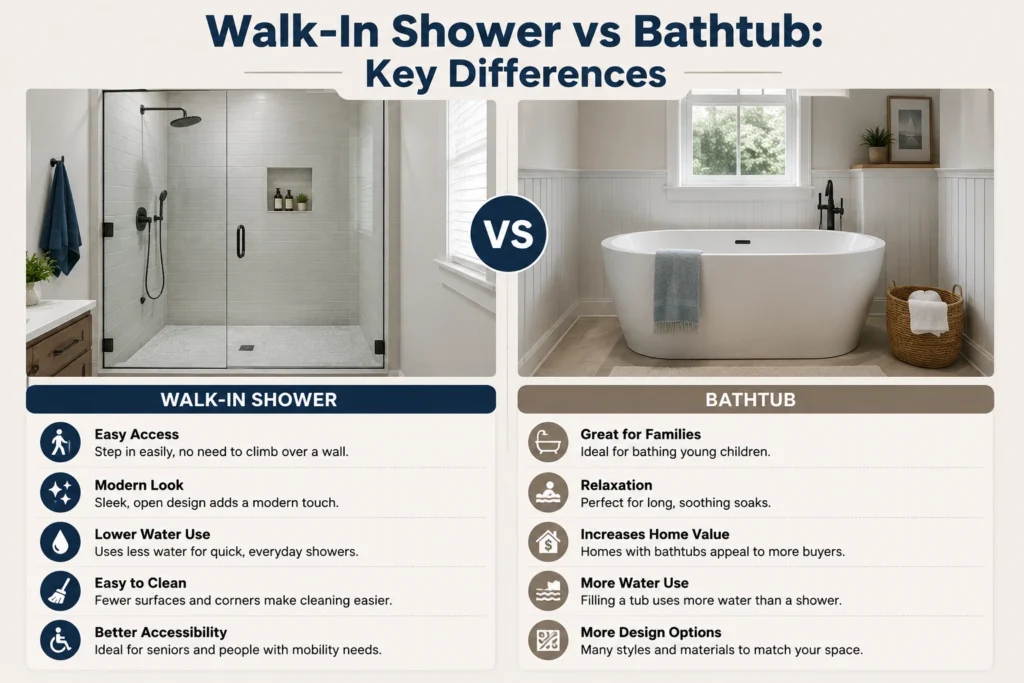
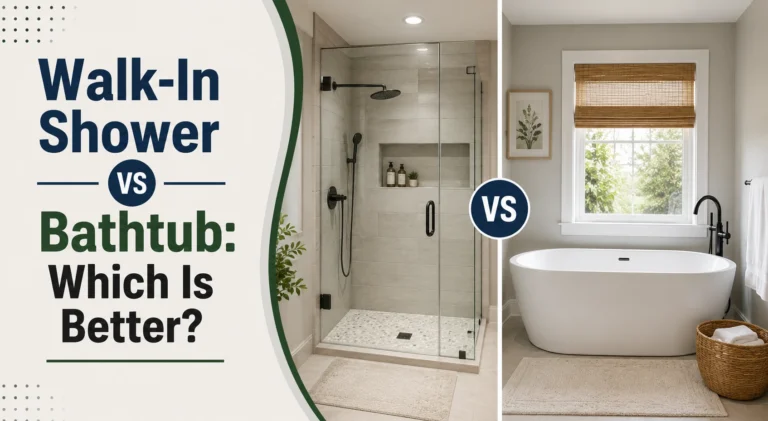
A walk-in shower and a bathtub serve the same purpose but offer very different experiences. Walk-in showers are designed for convenience, accessibility, and modern aesthetics, making them popular in contemporary homes. Bathtubs, on the other hand, provide a relaxing soaking experience and remain a practical choice for families with young children. According to the National Association of Home Builders (NAHB), many new homeowners prefer spacious showers in primary bathrooms, while real estate professionals often recommend keeping at least one bathtub in the home to appeal to a broader range of buyers. The best option depends on how you use your bathroom today and how you plan to use it in the future.
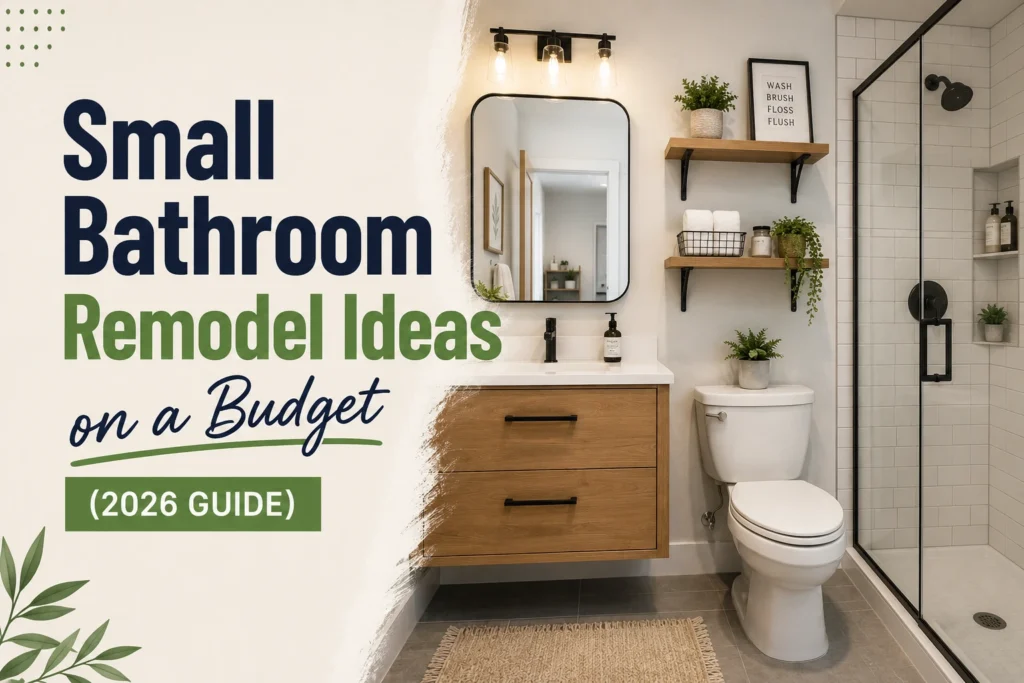
💚 You might also like: Small Bathroom Remodel Ideas on a Budget (2026 Guide)
What Is a Walk-In Shower?
A walk-in shower is an open or partially enclosed shower area that allows users to step directly inside without climbing over a bathtub wall. It usually features a glass enclosure or a barrier-free entrance, creating a clean and spacious appearance. Walk-in showers have become increasingly popular because they combine modern design with everyday convenience. They are available in a wide range of sizes, materials, and layouts, making them suitable for both compact and luxury bathrooms. Many homeowners also choose walk-in showers because they improve accessibility and can be customized with premium fixtures, built-in storage, seating, and slip-resistant flooring.
Types of Walk-In Showers
Walk-in showers come in several styles to suit different bathroom layouts and design preferences. Frameless glass showers create a sleek, open appearance, while semi-frameless and framed designs provide additional structural support. Curbless showers offer easy access for people of all ages and are especially useful for aging-in-place renovations. Corner walk-in showers maximize limited space, whereas large custom showers provide luxury features such as rainfall showerheads, benches, recessed shelves, and multiple spray systems.
Benefits of a Walk-In Shower
One of the biggest advantages of a walk-in shower is convenience. It provides quick access, requires less effort to enter, and is generally easier to clean than a traditional bathtub. Walk-in showers also make smaller bathrooms appear larger because transparent glass panels create an open visual effect. They use less water during short showers, improve accessibility for older adults, and offer countless design possibilities that complement modern bathroom remodeling trends.
Drawbacks of a Walk-In Shower
Although walk-in showers offer many benefits, they are not the perfect solution for every household. Families with infants often find bathtubs more practical for bathing children. Custom walk-in showers with premium tile, waterproofing, and luxury fixtures can also become expensive to install. In addition, removing the only bathtub from a home may reduce its appeal to some future buyers, especially families looking for child-friendly bathrooms.
What Is a Bathtub?
A bathtub is a plumbing fixture designed for soaking, bathing, and relaxation. Unlike a walk-in shower, it holds water so users can enjoy a full-body bath whenever they choose. Bathtubs remain a popular feature in family homes because they provide convenience for bathing children and offer a relaxing experience after a long day. Modern bathtubs are available in various materials, sizes, and styles to suit traditional and contemporary bathrooms. Whether you prefer a simple alcove tub or a luxurious freestanding model, a bathtub continues to be a valuable addition for homeowners seeking comfort and versatility.
Types of Bathtubs
Bathtubs are available in several styles, each serving different functional and design needs. Alcove tubs are the most common choice for standard bathrooms, while freestanding tubs create a luxurious focal point. Drop-in and corner tubs work well in larger spaces, and walk-in bathtubs are designed specifically for seniors and people with limited mobility. Material options include acrylic, fiberglass, cast iron, and stone resin, each offering different levels of durability and maintenance.
Benefits of a Bathtub
A bathtub offers advantages that go beyond basic hygiene. It provides a comfortable place to relax, soothe sore muscles, and reduce stress after a busy day. Many families also prefer having at least one bathtub because it makes bathing young children much easier. In addition, many real estate experts recommend retaining one bathtub in the home since it can improve buyer appeal, particularly among households with children.
Drawbacks of a Bathtub
Despite their comfort, bathtubs require more space than walk-in showers and generally consume more water during a full bath. They also take longer to clean because of their larger surface area. Stepping over the tub wall may be difficult for seniors or individuals with mobility limitations, increasing the risk of slips and falls. For homeowners focused on accessibility and everyday convenience, these factors can become important considerations.
Walk-In Shower vs Bathtub: Cost Comparison
| Feature | Walk-In Shower | Bathtub |
| Average Installation Cost | $3,500–$10,000+ | $1,500–$6,500+ |
| Basic Unit Price | $800–$3,000 | $300–$2,500 |
| Labor Cost | Higher (custom waterproofing, tiling, glass installation) | Lower for standard tubs; higher for freestanding models |
| Plumbing Cost | Moderate to High | Low to Moderate |
| Glass Enclosure Cost | $700–$2,500 | Not Required |
| Tile & Waterproofing | Higher | Lower |
| Installation Time | 3–7 Days | 1–3 Days |
| Maintenance Cost | Low to Moderate | Low |
| Repair Cost | Moderate | Low to Moderate |
| Water Usage | Lower (with short showers) | Higher (full bath) |
| Best For | Modern homes, seniors, and small bathrooms | Families, children, relaxation |
| Long-Term Value | Excellent for accessibility and modern appeal | Strong resale value when at least one tub is retained |
Best Option for Small Bathrooms
Limited space doesn’t automatically mean one option is better than the other. The right choice depends on your daily routine, household needs, and bathroom layout. Walk-in showers are often recommended because they create a more open appearance and maximize floor space. However, compact bathtubs can still work well in small bathrooms, especially for families with young children. A well-planned bathroom design, smart storage solutions, and the right fixture size can make either option practical. Before choosing, measure your available space carefully and think about how you use your bathroom every day, rather than simply following current design trends.
Choosing a Walk-In Shower
A walk-in shower is often the preferred solution for compact bathrooms because its open design creates the illusion of more space. Frameless glass panels allow natural light to flow across the room, making even small bathrooms feel larger. Corner installations, wall niches, and built-in shelving further improve functionality without sacrificing valuable floor space.
Choosing a Bathtub
If your household includes young children or you enjoy relaxing baths, a compact bathtub can still be a practical option for a smaller bathroom. Modern alcove tubs and space-saving models are designed to fit limited layouts while providing everyday functionality. Combining a bathtub with a shower can also maximize versatility without requiring additional space.
Water Use, Cleaning, and Maintenance
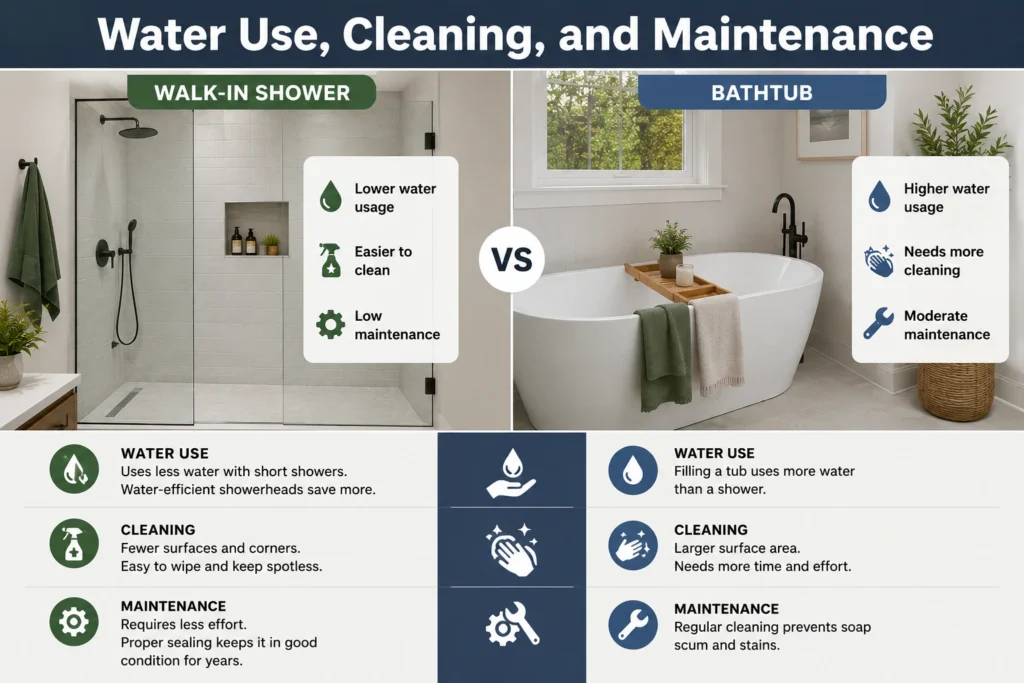
Daily maintenance and water consumption can have a noticeable impact on your long-term costs. The U.S. Environmental Protection Agency (EPA) states that replacing older showerheads with WaterSense-labeled models can save significant amounts of water each year. A short shower typically uses less water than filling an average bathtub, although long showers may consume even more. Walk-in showers are generally easier to clean because they have fewer large surfaces, while bathtubs require extra effort to scrub soap residue and mineral buildup. Proper waterproofing, grout maintenance, and regular cleaning help both options remain durable and attractive for many years. Selecting quality materials during installation can also reduce future maintenance requirements and repair costs.
💚 You might also like: DIY vs Professional Home Renovation: Which Is Better?
Which Adds More Home Value?
Resale value depends on your local housing market, neighborhood expectations, and the overall layout of your home. Many real estate professionals recommend keeping at least one bathtub because it appeals to families with children, while modern walk-in showers are highly desirable in primary bathrooms. According to the National Association of Realtors (NAR), bathroom upgrades remain one of the most attractive improvements for prospective buyers because they improve both functionality and appearance. Homes with a balanced bathroom layout, such as a walk-in shower in the primary suite and a bathtub in another bathroom, often appeal to the widest range of buyers. Instead of choosing based solely on resale value, homeowners should prioritize a bathroom that meets their current lifestyle while maintaining broad market appeal.
How to Choose the Right Option
Choosing between a walk-in shower and a bathtub comes down to your personal needs rather than following the latest bathroom design trends. Start by considering who uses the bathroom every day. A walk-in shower is ideal for busy homeowners who want quick access, easy maintenance, and a modern look. A bathtub is often a better fit for families with young children and those who enjoy a relaxing soak after a long day. Also, think about your bathroom size, remodeling budget, accessibility needs, and future resale plans. If your home has multiple bathrooms, keeping at least one bathtub while installing a walk-in shower in the primary bathroom offers the best balance of convenience and buyer appeal. Before making your final decision, compare installation costs, long-term maintenance, water usage, and how each option fits your lifestyle. A thoughtful choice today can improve both your daily comfort and your home’s value for years to come.
Frequently Asked Questions
Is a walk-in shower better than a bathtub?
It depends on your needs. Walk-in showers are better for convenience, accessibility, and modern design, while bathtubs are ideal for relaxation and families with young children.
Does replacing a bathtub with a walk-in shower reduce home value?
Not always. However, many real estate experts recommend keeping at least one bathtub in the home because it appeals to a wider range of buyers, especially families.
Which option is more affordable to install?
A standard bathtub usually costs less to install than a custom walk-in shower. Premium materials, plumbing changes, and custom designs can increase the cost of either option.
Which uses less water?
A short shower with a water-efficient showerhead generally uses less water than filling a bathtub. However, long showers may use more water than a single bath.
Are walk-in showers easier to clean?
Yes. Walk-in showers typically have fewer surfaces to scrub and are easier to maintain, especially when designed with large-format tiles and frameless glass panels.
Can You Install Both a Walk-In Shower and a Bathtub?
Absolutely. If your bathroom has enough space, installing both provides the greatest convenience, improves functionality, and can increase your home’s appeal to future buyers.
Conclusion
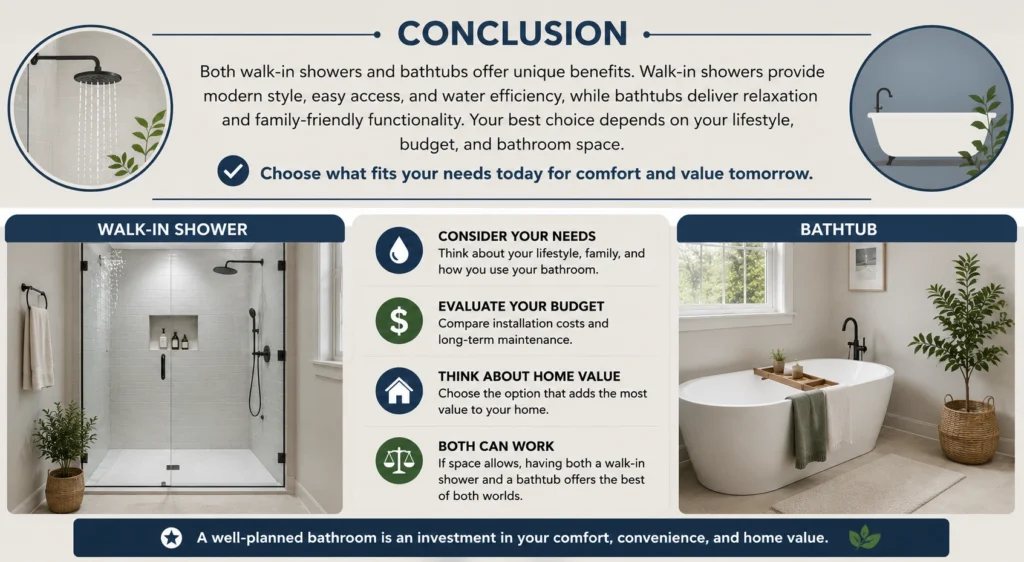
There is no universal winner in the walk-in shower vs bathtub debate because the best choice depends on your home’s layout and your family’s needs. Walk-in showers stand out for their sleek appearance, accessibility, water efficiency, and ease of maintenance, making them an excellent option for modern lifestyles. Bathtubs continue to offer unmatched comfort, practicality for families, and a strong appeal to many homebuyers. If space and budget allow, combining both features provides the greatest flexibility and long-term value. Ultimately, focus on selecting the option that matches your daily routine, complements your bathroom design, and supports your future plans. A well-designed bathroom should not only look beautiful but also deliver lasting functionality and comfort.
✨ Smarter home decisions start with HouseonStars.